Showing posts with label Hindi Film. Show all posts

Aug 21, 2015

Manjhi–The Mountain Man Movie Review: Not Perfect but a Significant Film

You can also read this article on Mad About Moviez.
After watching Manjhi – The Mountain Man, I came out of the theater with a buzzing mind. My eyes had turned a bit moist towards the end of the film but I also had a slight ache quietly making its way into my head. I had a lot of questions running through my mind, several visuals were stuck in my head but, also, a strange sense of incompleteness had infiltrated my heart.
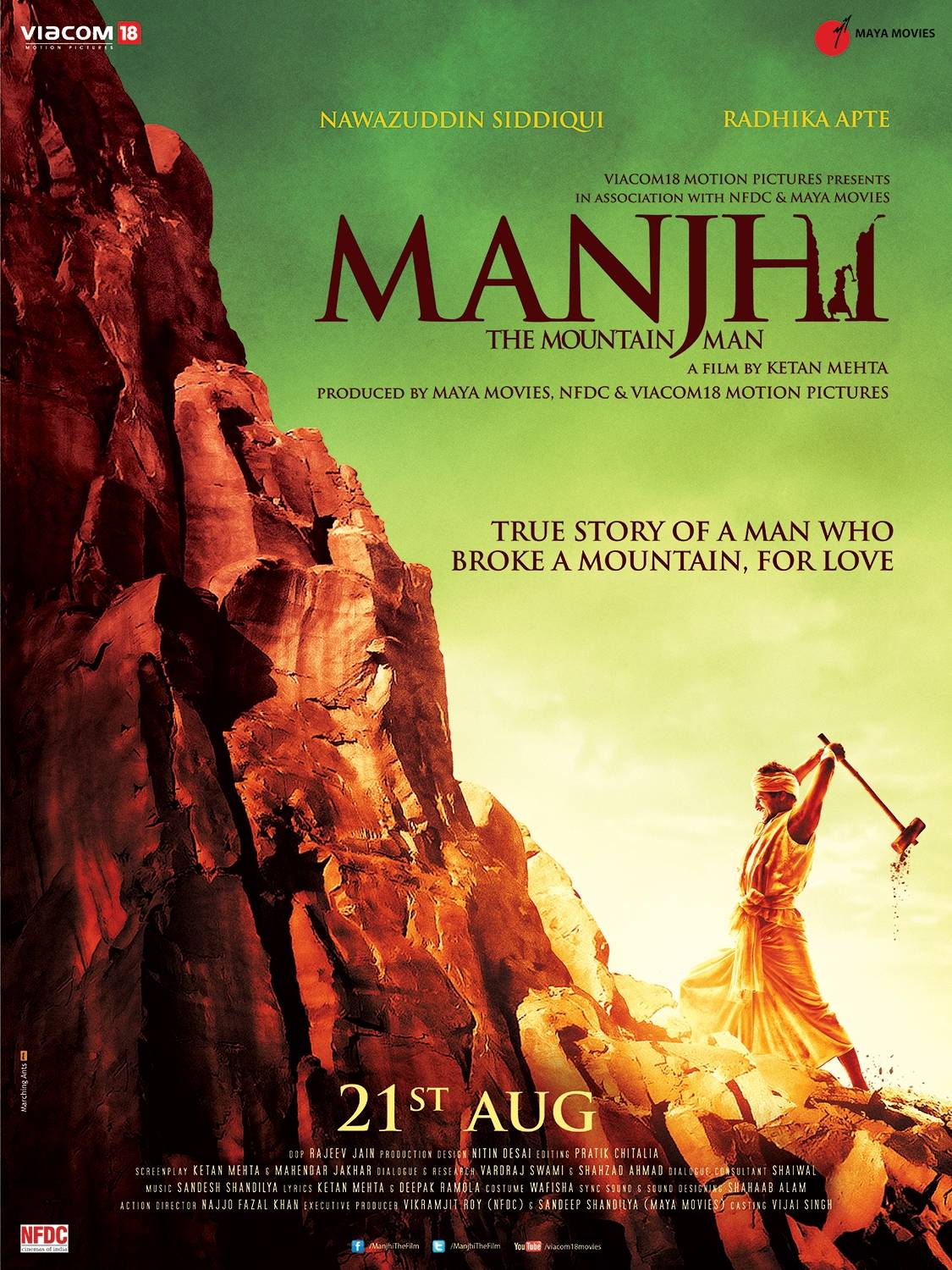
Manjhi the Mountain Man Poster 2After a lot of deliberation between my head and heart, I realized that Manjhi is not a great but a very significant film. Significant because you should watch it to believe how a lot of love and a bit of madness can make a man take on the mountain, and how horrifying are the twin social evils of casteism and poverty. Why does it fall short of being a great film? Well, we will dig into that a little later.
If you realize, there is a flip side to Dashrath Manjhi’s otherwise fascinating story. The long and arduous journey of the Mountain Man, as he his fondly and rightly called, can actually be summed up in a couple of sentences- “Dashrath Manjhi, a poor landless laborer from Bihar, worked meticulously for 22 years to carve a road out of a mountain using only a chisel and hammer. Aggrieved by the untimely demise of his wife, who died due to lack of medical attention, Manjhi took it upon himself to wage a lonely war against the mighty mountain that blocked basic amenities from reaching his village.” That’s it.
Yes, Dashrath Manjhi’s story is of ultimate triumph of human spirit and determination against all odds but it’s elements of drama and struggle are watered down because of the huge time period that it covers. How exactly can you bring in the moments of struggle, happiness, dejection, joy and drama in the story of a man who does the same thing for good 22 years? To put it in a few words, Manjhi’s story does not have the typical contours of adventures that we usually associate with biographies and heroic stories. Keeping this aspect of the story in mind, you cannot help but appreciate director Ketan Mehta’s tenacity and honesty in putting together different beads of Dashrath Manjhi’s remarkable life into a singular and mostly cohesive strand.

Manjhi the Mountain Man Still 1At times, Ketan Mehta, who has films like Mangal Pandey and Rang Rasiya to his credit, does go overboard with flashbacks of romance and also meanders a little in a bid to deliver a fitting finale. But, more or less, the soul of Manjhi – The Moutain Man is always blemish free. In fact, the film does a good job of tracing significant events of Indian history through the prism of Manjhi’s life. The sequence where Manjhi actually comes face to face with none other than Indira Gandhi took me by complete surprise and so did his march to Delhi during the times of Emergency. It is these small and rather unknown snippets of Manjhi’s life that the film brings out brilliantly.
The film is crisp at 2 hours and 5 minutes but comes across as a little dragged because of the incoherent screenplay. Taking a non-linear approach of narration, the director shuffles between different time zones in 22 years, and it somehow breaks the rhythm of storytelling. These hiccups in storytelling aside, the film makes an honest bid to showcase the evils of untouchability and caste prejudice that existed in newly independent India.
Manjhi – The Mountain Man has some terrific moments that bring out the horrors of caste oppression and depressing poverty. There are chilling scenes of poor and landless villagers being brutally beaten up, left to live in extreme poverty or worst, left to die in a burning brick furnace. The film is equally efficient at highlighting the systemic issue of corruption and administrative apathy that plagues India and most of its underdeveloped states.
In the acting department, the film is an out and out Nawazuddin Siddiqui show with the talented actor putting up a very restrained and nuanced performance that is very different from what he has been doing so far. When Nawazuddin plays the younger Manjhi, there are elements of his trademark humor and earthy acting, but he actually comes into his own while portraying the much older, aggrieved and almost maniacal version of Manjhi. The pain, the anguish, the tears, the toil – Nawazuddin embodies all of these emotions to bring out a character that is carved with flesh and blood. The actor must have pushed his limits while shooting this film and it is clearly visible in scenes of great human struggle and survival.
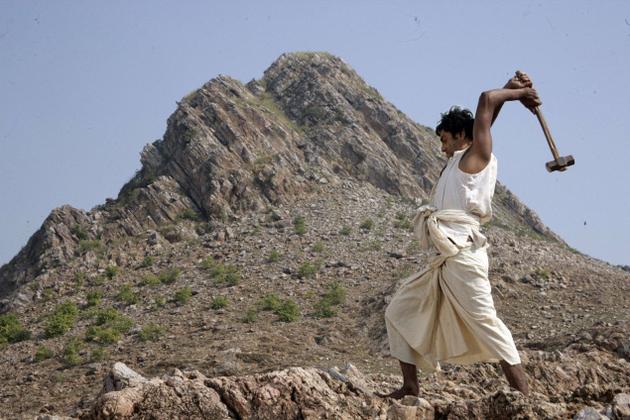
Manjhi the Mountain Man Still 2Radhika Apte looks beautiful and gets into the character of Manjhi’s wife, Phagunia, with utmost ease and spontaneity. She is a complete natural and leaves a big impact in a role that is completely deglamorized and required dialogues to be delivered in unadulterated local dialect and Bihari accent. Pankaj Tripathi is fantastic as a cunning son of the village Zamindar and gets his accent and mannerisms spot on. Ditto for Tigmanshu Dhulia who somewhat reprises his Ramadhir Singh act of Gangs of Wasseypur.
The overall impact of the film suffers due to some tacky VFX and excessive use of Chroma in some of the scenes. Similarly, a couple of dream sequences look very unreal and add to the overall randomness of the middle portion of the film. The film’s music (Sandesh Sandilya and Hitesh Sonik) and background score is average while the dialogue are effective, crisp and as per the local flavor of Bihar.
Overall, Manjhi – The Mountain Man is sprinkled with some fine renditions of human struggle, madness and love. The sparkling chemistry of Nawazuddin Siddiqui and Radhika Apte lifts the film to a great extent and it is precisely because of this reason that you feel triumphant and joyous when Manjhi finally accomplishes his task. The film could have been much more than what it is, but it is definitely worth a watch for the sheer significance of the story and some honest portrayal of our society’s stark realities.
Rating: *** (Good)

Aug 15, 2015

Brothers Movie Review: Mother of Yawns and False Dawns

The review is also published on Mad About Moviez.
I haven’t yawned this much while watching a film in a long long time. Yes, Brothers is a rare gem of a film in that sense. But, I have had this feeling of ‘when will this film end’ for so many other Hindi films that have released this year. Brothers is truly run-of-mill in that sense.
Karan Malhotra, the director who gave us the commercially successful but perennially boring remake of the 90s cult classic Agneepath, comes back with another remake in form of Brothers (official remake of 2011 Hollywood film Warrior) and does exactly what he has done before – he bores us to death. Okay, near death (conceding the fact that I am still alive to write this review). At times, I struggle to respond to those ever-inquisitive souls who come up to you after you have watched a film and ask you – how was it? A film like Brothers makes your job easier – you can simply say ‘boring’ and the answer shall perfectly suffice.
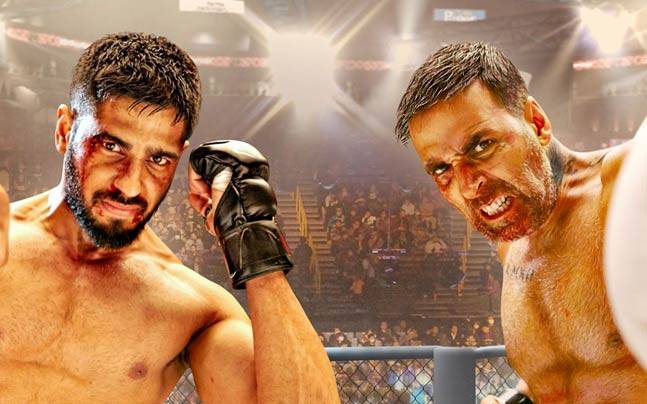
Brothers is the story of two brothers (yes, you are a genius because you guessed it right), David Fernandes (Akshay Kumar) and Monty Fernandes (Sidharth Malhotra), who are victims of familial conflict courtesy their drunkard father Gary Fernandes (Jackie Shroff), who we are told is an ex-street fighter. Separated by cruel fate of destiny, the two brothers come face to face in a mixed martial arts competition called Right to Fight (R2F). Punches and kicks fly thick and fast as the two face off in a dramatic final leaving behind a trail of broken bones and smoothened emotions.
akshay-story_647_081415100240
To be honest, Brothers has a riveting premise and it clearly reflects in the short description of the film that is given above. A drunkard father, a doting mother, two brothers who love each other but eventually fall apart, a tragic accident, street fighting, anger, repentance, forgiveness, redemption, underdog story, family melodrama – Brothers has all the ingredients of a typical Bollywood potboiler. But, sadly all these ingredients boil well over the brim and leave you with a bad taste in the mouth.
So what goes wrong with Brothers?
  1. An unpardonable penchant for theatrics and melodrama: The background score in the film is so loud and boisterous that it almost becomes an overarching character. The director tries to force feed emotions to the audiences and it clearly does not work. There are times when the background score becomes so buoyant that you start searching for validation through visuals on the screen. But sadly, the proceedings on the screen remain dull and never really evoke strong emotions.
  2. Lack of real emotions: Your eyes are never wet either when the brothers separate or predictably reunite towards the end. Much of the film’s first half is dedicated to pump up our emotions around the Fernandes family but you never really root for or hate any of the principal characters. Emotions fall flat on face perhaps because there is no room of subtlety in Brothers. Crucifixes, tattoos, cut marks on the same spot for every fighter, slow motion flashbacks, church shots – all of these stereotypical elements are thrown on your face and you are supposed to sob. Sorry, it does not work.
  3. Marathon Runtime: With a runtime of nearly 2 hours and 40 minutes, Brothers is a remarkable snooze fest. The first half goes on and on to establish the characters and plot, while the second half just never stops with its montages of fight sequences and tacky commentary scenes. There are simply too many loo breaks and yawn distractions – a tighter editing would have helped Brothers salvage some of its pride.
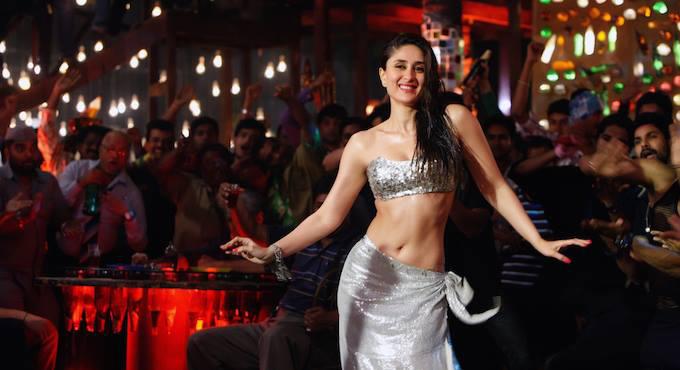
  4. An obnoxious ‘item song’: I have never come across a more pointless and lecherous ‘item song’ than ‘Mera Naam Mary Hai’. Principally, I am not opposed to the idea of an item song in a Bollywood potboiler as long as it serves some purpose in the narrative. Karan Malhotra’s Agneepath had an enjoyable item song in Chikni Chameli, but Mary arrives on the scene with no prior warnings and goes out without doing much. An item songs leading up to a film’s intermission? Really? Also, I wonder what made Kareena Kapoor Khan say yes to such a poorly written song with distasteful dance moves.kareena-kapoor-khan-looks-hot-mera-naam-mary-item-song-teaser-released-brothers-movie
  5. Uninspiring Support Cast: You have Ashutosh Rana in your support cast and you make him carry bottles in and out of the fighting ring. This is just one of the instances of talented actors being cast in rather insignificant roles in Brothers. Jackie Shroff is impressive in some scenes but accepting him as Akshay Kumar’s father seems a little difficult. True to his age, Shroff looks like Akshay’s elder brother and especially because the director decides not to shave off Akshay’s white beard and chest hair! Shefali Shah makes an impact in some of the emotional scenes and reminds us about her immense acting potential. Sidharth Malhotra looks a complete misfit and does little except for glaring and growling. It’s sad to see him struggle to get his emotions and body language right in a role that required immense intensity and dedication.
  6. Lukewarm Fight Sequences: Let’s not forget that despite its brutal display of contrived emotions and melodrama, Brothers is essentially a sports film. It is perhaps the first time that a film on mixed martial arts (MMA) and street fighting has been attempted in Bollywood. But sadly, despite all the build-up and staged pre-launch media madness, the fight sequences fail to make an impact. The fighters look more comical than menacing, our two heroes look more tired and aggrieved than motivated and driven. Both the opening and final fight scenes are big letdowns with the audience (in the theater) wondering what to do and whom to cheer for!
There are a very few likeable aspects of Brothers. And Akshay Kumar is one of them. The actor comes up with a nuanced and restrained performance that is very different from the mostly comical or out-and-out action-oriented roles that he has been doing off late. Jacqueline Fernandez (the only real Fernandez in a film of Fernandes’) looks believable in a brief role. The film’s cinematography is above average but other technical departments leave you asking for more – especially the editing department, which seems to have gone on a vacation. The film’s music (Ajay Atul) is a letdown with none of the songs registering in your memory.
Overall, Brothers buys an age-old Bollywood formula from a Hollywood film and makes a mega mess of it. The film is a sleep-inducing cocktail of sibling rivalry, familial discord and sports extravaganza that tries to be too many things at the same time. And most worryingly, it tries to pass off exaggerated melodrama via some in-your-face theatrics but ends up with mud on its own face.
This Independence Day, you deserve freedom for this Karan Malhotra sham of a film.
Rating: *1/2 (Poor)

Jul 31, 2015

Ghosts of Ganga and the Dazzling Display of Death in Masaan

When I try to paint a picture of the Ganga in my mind, I mostly imagine a pristine river with the rising Sun at the horizon. That’s how we all have been conditioned to imagine the holy river. Ganga stands for purity, tranquility and piousness; a river that may have been abundantly polluted over the centuries but, as per the millions’ belief and reverence, still holds the magical power to purify the polluted. Neeraj Ghaywan’s Masaan paints such a contrasting picture of the holy river and its mythical home –Varanasi that it shakes your conscience and unravels the ghosts that lie quietly somewhere deep inside the river bed.
Our films mostly shoot on the Varanasi’ Ganga Ghats in the morning. The serenity of the morning light, the splendid sight of the boats sailing on the waters, the believers paying their obedience to the Almighty, and the sound of hymns and bells of devotion; all of these make for a stunning visual. In stark contrast, Masaan (the word means crematorium in English) has a protagonist, Deepak (played by the brilliant Vicky Kaushal), who dives into the Ganga river at night, burns dead bodies at its bank early in the morning, hits the dead body’s skull and limbs back into burning pyre so that the last rites are seamless, and he also cries and howls in seething pain at its bank.
Masaan’s Ganga is dark, its waters black and its banks are abodes of implicit human agony and anguish. And most importantly, Masaan’s Ganga is a means to achieve the greatest closure any living being can wish for – death.
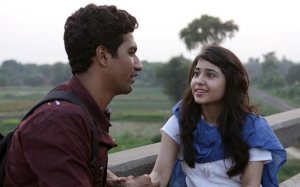
masaan-story_647_072115010130Masaan’s portrayal of the Ganga and its Ghats in Varanasi is innately disturbing but hauntingly beautiful. You are constantly at unease when visuals of burning death pyres hit you at an alarming regularity but never ever you are able to take your eyes off the screen. And that’s the biggest achievement of Masaan and its makers. They throw the greatest reality of life (how ironic that it is nothing but death) on your face but juxtapose it with subtle messaging and a heartwarming story that grips you like a hawk’s claws. Masaan haunts you long after you have left the theater. The visuals stick to your brain.
I have always been intrigued and rather fascinated with themes of death in popular literature and art. JK Rowling brilliantly introduced the beauty of mortality to her young and impressionable readers. Mitch Albom is one of my favorite authors these days as his books throw a different light on death, loss and longing (in no particular order). Neeraj Ghaywan joins the elite list with Masaan. His film takes away the perceived fear and brutality of death and celebrates its inevitability.
That death is often succeeded by a numbing feeling of loss is a universal fact. And loss, either by death or by separation, is succeeded by a strong sense of longing. Masaan’s principal characters epitomize the trinity of death, loss and longing. Here are some excellently conceptualized and seamlessly executed sequences from Masaan that give us ample indication that Neeraj Ghaywan is a man who likes to keep the reality naked:
  1. In a heart wrenching sequence in the second half, Vidyadhar Pathak (played by the ever-reliable Sanjay Mishra) puts his head in his daughter Devi’s (played by a restrained Richa Chaddha) lap, a beautiful role reversal of the man-child relationship, and says sheepishly, “Hum tumhari Maa ko nahin maare hain” in a typically innocent Bihari/Eastern UP accent. Flood gates of his eyes open and the inner guilt of perhaps not having done enough to save his ailing wife shows on his face in form of helplessness and inscrutable pain. This moment of catharsis cements Pathak’s and his daughter’s weakening bond, highlights the everlasting impact of an important death and showcases how loss and longing always go hand in hand.
  2. Death forms an ever-lasting and sometimes chilling backdrop of Masaan. In another sequence, a reassured and madly-in-love Deepak, whose confidence is boosted by his beloved Shalu’s (played by the beautiful Shweta Tripathi) acceptance of his supposedly lowly caste and social background, is woken up by his irritable elder brother in the morning. He wants Deepak to help him in burning some of the dead bodies as the volume of work is unexpectedly large. Deepak gets on with the task with an air of nonchalance as burning dead bodies was his family’s daily job and his everyday sight. The sequence goes on and on for good 3-4 minutes with Deepak picking up dry woods, shoving limbs back in the pyre, burning dead bodies and you wonder what could be the significance of this longish sequence. The sequence finally ends when Deepak is helping his brother in lifting a dead body and putting it over the pyre. The right hand of the dead body suddenly comes out of the white shroud and Deepak notices a familiar red ring in one of the fingers. Shalu had died in a bus accident last night.
  3. Deepak, shocked and numbed by the cruel twist of fate and irony of circumstances, somehow manages to pull out the ring from Shalu’s finger – the only memento of their brief but breezy romance. But, that ring becomes an albatross around his neck as it keeps reminding him of his ill-fated love. He cries manically in seething pain while drinking on one of the secluded Ghats along with his bunch of caring and understanding friends. As he lets out bursts of extreme despair and frustration in loud mourning, your eyes become wet and the body shivers by the mere thought of having to face such tragic loss in life.
  4. Deepak eventually throws the ring into the river one fine night. The very next moment, he wants to retrieve it back as he jumps into the dark waters and swims vehemently but fails to locate the tiny ring. Towards the climax, the ring is finally retrieved by Jhonta (played by the little bombshell Nikhil Sahni) who is Vidyadhar Pathak’s tiny partner in his religious business on the Ghats. Jhonta gets his hand on the ring while having dived into the river as a part of a bizarre diving competition on the Ghats where children collect coins from the river bed while elders bet on them. Pathak bets as much as ten thousand rupees on Jhonta as he desperately needs money to pay the policeman’s ransom, but Jhonta drowns mid-way through the competition and is later hospitalized in order to be saved. Pathak loses all his money but Jhonta rekindles his hope by handing him over Shalu’s ring which would fetch some money once it is sold to a jeweler.
One man’s loss is another man’s saving grace in Masaan. Neeraj Ghaywan portrays death both as a tragedy and a symbol of hope. Deepak’s family earns money by burning dead bodies, Deepak has to see his beloved’s dead body burning before his eyes and Pathak’s life is saved by a token of someone’s lost love and tragic death. All of this unfolds in and around Ganga, the river that mostly symbolizes life but also quietly carries the dead in her womb. Masaan is a celebration of death, loss and longing. The kind of celebration that resonates in our heads for long – irrespective of how much we have loved, lost or longed ourselves.
P.S. – I watched Masaan on 27th July at a Delhi multiplex. The 08.35 PM show. Coincidentally, within half an hour or so, a NDTV news flash on my phone informed me about the sudden demise of former President Dr. APJ Abdul Kalam. Death and its contours – you can never figure it out completely.

Jul 18, 2015

Bajrangi Bhaijaan Review: Salman Doesn't Play Himself and It Works

Salman Khan is Rambo meets Rajinikanth with a sprinkle of Robin Hood for Bollywood loving populace. The damned shirt that he wears, rips itself off his chiseled body, Munnis swoon over his dance moves, leading ladies blush every time he cracks a not-so-funny joke and most importantly the bad men remember their grannies by a mere mention of our great Indian messiah of the masses. So, it is almost unthinkable to imagine the same irrepressible Salman Khan as a simpleton who is so earnest, sweet and well-behaved that you may consider pinching yourself. Kabir Khan’s Bajrangi Bhaijaan takes a great gamble by projecting Salman as not himself but as somebody that he can perhaps never be (in real life) – and boy, the gamble pays, and pays well!
Let me remind you that Salman Khan as a simple and sweet guy is not a discovery of Kabir Khan. Salman of 90s was a shy but charming hero, most notably as portrayed in Sooraj Barjatya films, but it is the Salman of the post Wanted era that the audiences have lapped up with both their hands. The macho image of Bhai who is ‘Dabangg’ enough to ‘Kick’ his enemies but his also ‘Ready’ to have a bit of fun has done wonders to Salman’s career which was going through a rough patch in the mid 2000s. It is in this regard that Bajrangi Bhaijaan is both a clever and risky film for Salman Khan.
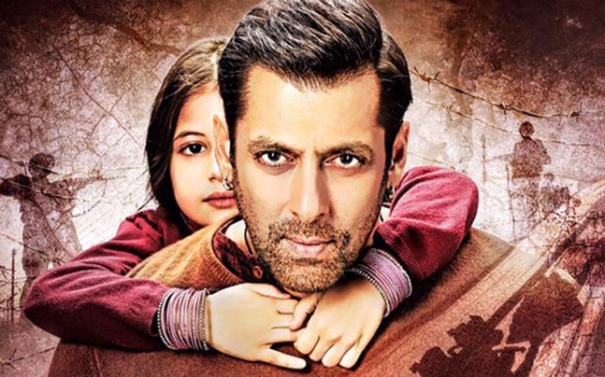
Khan plays Pavan Kumar Chaturvedi aka Bajrangi in Bajrangi Bhaijaan, a sweet buffoon who is a great devotee of Lord Hanuman but is actually good for nothing in life. But his life changes when he bumps into a 6-year old Pakistani girl Munni/Shahida (played by the cutest girl child ever – Harshaali Malhotra) who has lost her way in India. Overcoming his initial reluctance and apprehension, Pavan finally decides to take the little girl all the way to Pakistan all alone and that too without any Visa or passport! Did you just imagine Bhaijaan punching the soldiers in green in their face, driving through the roads of Karachi in his sports bike, shooting and mowing bad souls who come in the way? Well, nothing of that sort happens. And, yes I just devoted a paragraph to describe the story of a Salman Khan film! Bajrangi Bhaijaan DOES have a good story!
bajrangi-story_647_062715064026
Bajrangi Bhaijaan’s greatest strength is its simplified, or say oversimplified approach and treatment. Our hero, Bajrangi, is a devout Hanuman bhakt so he never lies, not even to the Pakistani officers who are questioning his presence in their country. Bajrangi is a noble soul, a sweetheart, so he never unnecessarily runs into Pakistani police or army, unlike Sunny Deol of Gadar. In fact, most of the times, Bajrangi is avoiding confrontation, folding hands, greeting people, sharing happiness! Ah! Say hello to new Salman Khan!
Kabir Khan tries to juxtapose formula with social messaging and mostly succeeds. In fact, his simplistic resolutions to Indo-Pak bitterness, religious orthodoxy reminds you of the unbelievable but enjoyable social problem solutions provided by Rajkumar Hirani and his team in PK and 3 Idiots. Kabir Khan does not have the finesse of a Hirani but he is good with the limited scope of story and screenplay which is at disposal. Most interestingly, he manages to extract ‘acting’ of some sorts out of Salman Khan who easily delivers one of the most important performances of his ‘acting’ career. Salman may not be a revelation in the film, he has never been one throughout his career, but he is clearly earnest, sweet and more ‘human’.
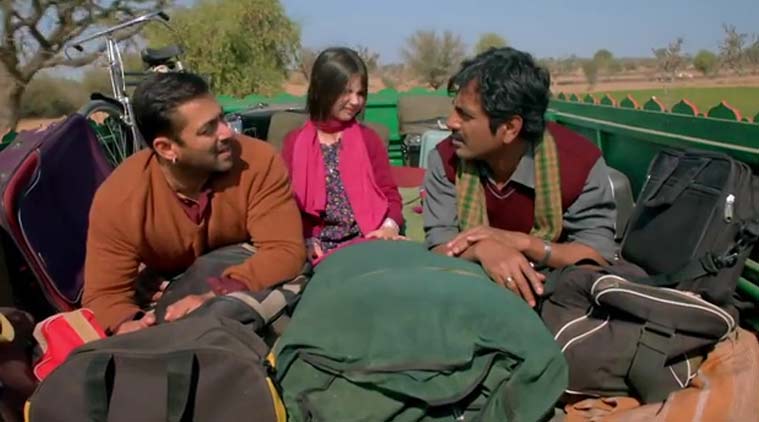
Bajrangi Bhaijaan is also catapulted by a strong support cast led by Nawazuddin Siddiqui who plays Chand Nawab, a small time reporter in Pakistan. Nawazuddin brings in his unique brand of humor and a certain earthiness to the entire proceedings. Kareena Kapoor Khan is relegated to a bit role and it is sad to see her play an almost third fiddle in the film. Sharat Saxena and Rajesh Sharma are effective in their support roles but the star of the show is the little girl, Harshaali Malhotra. The girl is brilliant given her tender age and the fact that she has no dialogues to deliver. Her pretty face, lovely smile and occasional tears smoothen the film’s blurred edges and evaporate the audiences’ fatigue, if any. The bonding of Pavan and Munni/Shahida is another high point of Bajrangi Bhaijaan. It is one of the finest rendition of ‘child and his/her protector’ relationship that we have seen in Hindi films of late.
nawazuddinbajrangibhaijaan
The film’s music (Pritam) is average and some of the songs add little value to the narrative. The film could have easily been trimmed by at least 15-20 minutes to make it more sleek and edgy. Nonetheless, the overall length of the film (154 minutes) never really catches on to your nerves because the narrative is nicely woven into different sequences and sub-plots. The cinematography (Aseem Mishra) captures the essence of Kashmir, Delhi and Rajasthan perfectly and the recreation of the Pakistani hinterland seems to be believable.
Bajrangi Bhaijaan may not be perfect and you may wonder at times that how can somebody be ‘so good’ or ‘so foolish’. But, Salman’s films have always been about the make-believe world. For a change, this is a Salman Khan film that does not ‘force’ you to believe, it simply makes its point in an uncomplicated manner, and you are almost swooned into the utopian world of a simpleton. It has its heart at the right place, emotions tucked in large quantities (keep tissue papers handy), and intentions mostly gentle and nice.
Watch Bajrangi Bhaijaan because it is one of the better Salman Khan films in a long long time. Yes, this one is not just about the affable Bhai but also has a lot of ‘jaan’ or life of its own. Recommended!
Rating: ***1/2 (Very Good)

Jul 11, 2015

I Love New Year: Canned But Not Devoid of Juice

If you decide to watch Sunny Deol-Kangana Ranaut starrer I Love New Year (stylized as ‘I Love NY’), which in all likelihood you would not, do not enter the theater with any pre-conceived notions. Yes, the film has been delayed for a couple of years and it is definitely not the best Hindi rom-com that you are likely to come across, but it is not unwatchable. In fact, I Love New Year genuinely tries to be different from run-of-the-mill rom-coms and attempts to tell a unbelievable story through believable means. Most of the film’s pitfalls are inflicted by the cruel fact that lost time and momentum makes any product stale and mediocre. Adding salt to the injury is Kangana Ranaut’s decision to mostly disassociate herself from the film and Sunny Deol’s lack of enthusiasm in promoting what is one of his better performances in recent times. More on this later.
I Love NYSunny Deol plays Randhir Singh, an ageing and unmarried Punjabi (no prizes for guessing that), who lives in Chicago with his father (Prem Chopra). A day before the new year, Randhir has a drinking binge with his friends and is in the process transported to New York. In New York, Randhir mistakes Kittu Verma’s (Kangana Ranaut) flat as his own and there begins a series of confusions and misunderstandings that spill well into the upcoming new year.
The film’s story is reportedly based on a popular Russian rom-com. That scope of inspiration aside, the story does have merits of its own. The premise of a drunk ageing bachelor from Chicago landing up straight in the bedroom of a young, vibrant girl in New York is quite tempting. Love as a subject has been so thoroughly explored by all the filmmakers that any innovation in ‘how they actually meet and fall in love’ ends up exciting me. The setting of the story is simple and real with most of the action unfolding inside an apartment. The indoor setting, the smooth flow of one scene into another, quirky and smart dialogues, they all set up a nice little mood for the film.
However, the bright side of the story and screenplay mostly ends here. There’s is too much left to chance and destiny in the whole proceedings. The film’s climax is rather underwhelming and you wonder if the film could have ended good 15-20 minutes before. As the film has seen the light of day after being in cold storage for long, there are some tacky dubbing and visual patches. The climax looks incomplete and the overall film does bear the stain of having a somewhat stale look.
NY
Let;s now talk about the performances. Kangana Ranaut did not want this film to be released. When you will watch I Love New Year, you will exactly know the reasons behind the film’s leading lady’s inhibitions. Miss Ranaut perhaps did not want the film to release because her acting looks very unpolished and poor. In fact, there are some scenes where Kangana makes you laugh unintentionally because of her funny accent and problematic dialogue delivery. It is clear that she has come a long way in these two years and her apprehension about the film was very much related to her own performance. However, I sincerely feel that once a film has been completed, it becomes the producer’s property and the actor has little or no right to try and stall its release. Moreover, no matter how bad you were in your skills in the past or how fine-tuned you are now, an artist must stand by his or her work all the time. Specially, when big money and livelihood of many is at stake.
Sunny Deol gets out of his comfort zone and tries his best to give a sincere and composed performance. His chemistry with Kangana does look a little odd, largely because of the 30-year age canyon that separates the two. Though, Deol does a fine job of the difficult task assigned to him, you end up wondering why would have the makers thought of casting him in this role? Did they want to go for an unusual pairing? Then, why not choose an older actress opposite Deol or a younger actor opposite Kangana? I mean all the good acting talent of Deol and Kangana aside, there are some close-up scenes where the two look like father and daughter! T-Series should fire their casting director (or have they done that by now?).
I Love New Year’s biggest plus is Pritam’s music. From the peppy Gudd Naal Ishq Mitha to sombre Judaai, the film’s soundtrack is soothing and melodious. In fact, you may want to hunt for the film’s songs and download them – a definite good addition to your playlist. The film’s production value, editing, dubbing and sound design aren’t great. That’s most likely because of the huge gap between production and release of the film.
Overall, you feel letdown by I Love New Year, not because it’s a disastrous film, but because it’s been handled disastrously. What could have been a light, little rom-com is eventually a half-baked embarrassment that does more harm than benefit to reputation of everyone involved. Watch it if you want to see how mediocre Kangana was as an actor just a couple of years ago or if you want to see a calm, caring Sunny Deol who still has some acting chops left in him.
Rating: ** (Average)
The review is also published on Mad About Moviez.

Jun 18, 2015

Box Office: Why Should Bollywood be Wary of Its American Big Brother?

Hardly a week back, Rajkumar Hirani and Vidhu Vinod Chopra threw a bash in Mumbai to celebrate PK’s unprecedented success in China – an unconventional and largely untapped territory for Hindi films. The event was attended by a visibly beefed up Aamir Khan, Anushka Sharma and other cast and crew of the film. Around the same time, in the same bustling and humid Mumbai, the members of the fabled Bhatt Camp were huddling and wondering what exactly went wrong with their ambitious Hamari Adhuri Kahani. Like they say, every Friday fortunes fluctuate in Mumbai and few would know it better than the Bhatt brothers – Mahesh and Mukesh – who produced the Emraan Hashmi-Vidya Balan starrer. So while PK has taken Bollywood to dizzying new heights (in terms of business) by grossing over a staggering 100 crores in China, back home in India, things do not look so bright for a film that’s backed by one of the most reliable and profitable film production houses.
But, what went wrong with Hamari Adhuri Kahani? Bad reviews? Not really, because it’s not rare for a Bhatt camp film to be panned by critics. In fact, Mahesh Bhatt and his ilk have a firm grip over the mood and nerve of the masses. They know what works in huge swaths of India that resides outside metros and big cities and that’s precisely the formula behind their production house’s roaring success in the last decade, irrespective of how the critics receive the film. Then, what killed Hamari Adhuri Kahani? Apart from its own glaring misgivings, the film was seemingly chomped down by rampaging dinosaurs of Jurassic World who rode straight into the hearts of the Indian masses, leaving behind a weeping Vidya Balan and a shocked Emraan Hashmi. Yes, you read it right.

Here are some facts that tell us how Hollywood is slowly but surely posing a serious challenge to Bollywood:
  1. With the super success of films like Fast and Furious 7, Avengers: The Age of Ultron and now Jurassic World, the writing is clear on the wall for our desi producers. They do not just need to watch out for potential box office clashes with ‘Khan Films’, but they also need to be wary of big Hollywood releases – especially films that are successful franchises or fall in the action/sci-fi genre. Sample this – Fast and Furious 7 released on the same day as Detective Byomkesh Bakshy and easily trumped it to emerge the winner at the box office. The first week collection of Detective Byomkesh Bakshy was a paltry 19.75 crores. Contrast it with Fast and Furious 7, which grossed around 70 crores in week 1 and then went on to become the highest grossing Hollywood film ever in India with lifetime business of a remarkable 110 crores. You don’t need to be a rocket scientist to figure out that Detective Byomkesh Bakshy, already a niche multiplex film, was swept away by the rampaging F&F franchise.The history seems to have repeated itself with Hamari Adhuri Kahani and Jurassic World. While the Hindi film could only mint 16 Crores in its opening weekend with virtually no growth and a poor trend, the Dinosaur franchise went from strength to strength and garnered close to 30 crores in its opening weekend with a very healthy trend.
  2. While Bollywood producers are rightly vying for more and more overseas business and going into foreign territories that no one ever imagined before, back home the domestic audience also seems to have matured and developed a definitive, distinct taste. Any Bollywood product with mediocre content (Bombay Velvet, Hamari Adhuri Kahani) is summarily rejected and only films with good content (Piku, TWMR) are accepted. With ticket prices soaring, the audience is not ready to compromise on content until and unless the film is spearheaded by a massive star (read the Khans). Interestingly, the same junta is taking up to ‘event’ Hollywood films with disaster, sci-fi and action themes in a big way. Even content driven Hollywood films like Gravity, Life of Pi and Inception have started to make a mark at the Indian box office with collections going well into tenth and eleventh weeks!
  3. Hollywood films have the great advantage of big studio backing which allows them to dub in regional languages. This ensures that the overall business of these films in India goes up significantly. Imagine this – more than 50% of Jurassic World’s business in India is driven by dubbed regional versions. On the other hand, growing number of multiplexes in the country has encouraged the Hindi filmmakers to make films that cater only a niche segment of the audience. For example, although Zoya Akhtar’s Dil Dhadakne Do should manage to earn profits, most of its revenue is coming only from 4-5 big cities like Delhi, Mumbai, Bangalore and Pune. The film’s collections in mass belts like Bihar, CP and Rajasthan is very low.So, while Hollywood is solidifying its net collections through dubbed versions, Hindi films are losing out their pan-India appeal. There are hardly four to five Hindi films every year that can boast of healthy all India business. A point to ponder for the producers?
It can be easily said that Hollywood is at its strongest best at the Indian box office right now. With continued flow of mediocre Hindi films, very few big-budget and star-driven films and more and more niche films in the offing, the time is ripe for the big American Daddy to conquer the Indian market which has so far proved to be elusive. Not suggesting that the dinosaurs and the ETs are going to run riot in India and throw the Hindi films out of the window, but there’s a definite nudge, or rather a push, from the high and mighty Hollywood. And the push is big enough for Bollywood to sit back and notice.

May 23, 2015

Tanu Weds Manu Returns Review: You Will Like the Film, Not Tanu & Manu Themselves

Tanu Weds Manu, Anand L Rai’s much-liked rom-com that released in 2011, managed to break quite a few, if not all, shackles when it comes to predictable love stories. But, Tanu, the feisty, unconventional protagonist of the 2011 film is somewhat underwhelming and repressed in this sequel. Equally cut to size, barring a few kilos that he seems to have gained, is Manu (played by R Madhavan), the inconspicuous and ‘boring’ hero. The task of seeing through this rather ‘forced’ sequel is assigned to Kangana’s double avatar, Kusum aka ‘Datto’, the Haryanvi athlete studying at Delhi University who happens to be Tanu’s doppelganger.

Tanu Weds Manu Returns flatters to deceive since beginning. Starting four years after the marriage of the unlikely couple Tanu and Manu, the film initially ignites hopes of looking into the subject of post-marital discord with doses of earthy humor. When Tanu leaves behind Manu in a mental asylum in London and comes back to her den in Kanpur, you shift a little in your seat quietly telling yourself – okay, let the madness begin. However, right after the first half an hour and well till the end of the film, Tanu Weds Manu Returns makes you question the logic, the rationale of the supposed dissonance between the lead couple and their means to overcome it. So, it is rather unfathomable when Tanu who returns to Kanpur with same swagger and rowdy spirit that had made her stand out, miraculously melts down towards the end and almost surrenders herself in order to get back in Manu’s life. So much for her free spirit, unconventional ways, in-your-face attitude and walking in slow motion to Move on, Move On? Was the sequel made to somewhat tame or to show Tanu her true place?

On the other side of the spectrum is Manu’s character, which becomes worryingly unidimensional, his motives become disturbingly unclear and there are stages in the film when you almost want to take decisions on his behalf – because, you know he is screwing it up big time! Manu’s character in this film, unlike in the prequel, is shockingly underwritten and his chemistry with both Tanu and Kusum is left rather untapped.


But, all is not unwell with Tanu Weds Manu Returns. All through the film’s 2-hour runtime, you are treated with some fine, humorous writing courtesy of Himanshu Sharma, who also wrote Rai’s previous films - Tanu Weds Manu and Raanjhanaa. That the writer has a penchant for earthy humor and whistle-worthy/crowd-pleasing one-liners was very much on display in Raanjhana, where he almost managed to make stalking acceptable with his superior writing. Here as well, you have glimpses of his talent, mostly displayed via hilarious lines delivered by a brilliant Deepak Dobriyal who reprises his role of Manu’s confidant and best friend, Pappi.

Another actor who gets the share of some fine writing is Mohammad Zeeshan Ayub as Chintu, a character that defines himself as ‘kandha’ or shoulder to Tanu whose heart’s been freshly broken. Chintu’s character is not just funny but is also very well-defined in terms of small town sensibilities and mannerisms. But, the biggest show stealer is Kangana Ranaut’s portrayal of a young Haryanvi athlete with short hair and slightly bulging teeth (hence, the nickname ‘Datto’). She is so believable and lovely as Datto that you almost root for her towards the climax despite knowing in your heart that the film is going to travel the predictable path. The way Kangana pulls of thick Haryanvi accent, body language and mannerisms of a young student cum athlete is truly remarkable. The film never caricaturizes her character or the overall Haryanvi connection, except for a brief sequence where you are preached about female empowerment and how everyone should let the women have some freedom of choice! Fake feminism, eh?


Interestingly, while Kangana pulls off the double role superbly, it’s her original character of Tanu that somehow gets overshadowed in the process. The blame for the same mostly lies at the writer’s door who has not done justice to Tanu’s part except for some repetitive insinuations towards her being flirtatious, strong-headed and sometime almost cynical. R Madhavan, the greatest representative of common Indian lover – the one who is a little plump, ages ‘normally’, wears glasses, has a boring job, but is a sweetheart from inside – is suitably restrained, understated yet charming as Manu but is undone by the monotony of his character. That Madhavan is a brilliant actor is showcased on more than one occasions where the actor steals a scene or two without speaking a single word. His shy looks, roving eyes, conceived emotions, believable behavior are all at display but that solid meat at the center is missing.

The film’s soundtrack is not as memorable as its prequel’s, except for the ‘Swagger’ song that’s clearly the USP. The background score and cinematography are well-oiled to capture the small town milieu. Ditto for editing, which is crisp and smart, ensuring that you never real check your watch!
Tanu Weds Manu Returns would have been a brilliant standalone film but is a little underwhelming as a sequel. You may end up liking the film but you somehow do not empathize with or root for its principal characters – Tanu and Manu – which is quite strange. In fact, all your sympathies are directed towards Kusum, who ends up being a sacrificial lamb in what is nothing more than frivolous and undefined post marital discord between Tanu & Manu. Add to this, the several untied knots in this supposed love triangle. For instance - while you can understand Manu being drawn towards Kusum as she heavily resembles his wife, you somewhat keep asking yourself this question about Kusum eventually reciprocating Manu’s feeling– why would a young college athlete fall for a 40-yeard old, almost-fat, divorced man who initially stalked her liked a goon?

All in all, points to the makers for trying because rarely does Bollywood go beyond the standard template of ‘happily ever after’. Tanu Weds Manu Returns is that rare mainstream Hindi film that tries to dispel the myth of 'all is well that ends well’ but eventually falls prey to the same predictable temptation of setting everything right at the end. The film is brave, ridiculous, funny, empowering, and powerless - all at the same time. Like how love is.

Watch it because Kangana Ranaut is in form, there are some genuine laughs and madness. You will most likely come out of the theatre with a smile on your face but you will realize that the charm of the original Tanu and Manu has eroded. May be that’s what happens when you are married off for four years.

Rating: *** (Good)

May 2, 2015

Movie Review: Gabbar Is Back, But You Will Not Care

They shouldn't have evoked Gabbar's name in the film. Gabbar, perhaps the most iconic villain in the history of Hindi Cinema, has nothing to do with this 2-hour, 10-minutes long humbug of a film that dangerously tries to blend formulaic action-masala with the tricky genre of vigilante justice. The film lacks conviction itself and fails to convince you because of its dangerous positioning where kidnapping, killing by hanging are glorified as legitimate means of rooting out corruption and serving 'justice'.

Akshay Kumar is a college professor who doubles up as a corruption crusader when he is not teaching. He christens himself as 'Gabbar', for reasons best known to him, and keeps reminding us that he is 'naam se villain, kaam se hero'! Eh! While vigilante justice films can be absolute revelations if they are beaming with purpose and sparkling with novelty (remember, A Wednesday and Akshay's own Special 26?), Gabbar Is Back is extremely preachy and devoid of any originality. I am not even trying to explain to you that this film is a remake of a Tamil film's Telugu remake. Did you get that?

13-gabbar-is-back

To its credit, Gabbar Is Back maintains a good pace throughout and is backed by a hero who is punching hard at all the right places. In fact, the film's first half breezes through rather easily even though there is no moment of glory. The problem, or rather say potholes in the screenplay, arise in the second half when Gabbar's tragic back life comes into the fray. So, Mr. Director, is Gabbar a social reformer with PWD (Power Wala Danda!) or simply a disgruntled, frustrated man who is out there to avenge the death of his wife (guest appearance by Kareena Kapoor in a curious pink nose) and unborn child? From this point onwards, Gabbar Is Back falls flat as motive becomes hazy, modus operandi questionable and logic anyways was always sitting pretty out of the window. How does Gabbar shortlist the 'corrupt' ones from thousands of officers? Who verifies if the corruption charges are legitimate at first place? There are plethora of unanswered questions that you will perhaps not even bother to ask by the time the tedious second half assumes its predictable proportions. Even the investigating officers, featuring Jaideep Ahlawat as a CBI officer and Sunil Grover as a constable who is overzealous and uselessly curious, seem quite disinterested in tracing Gabbar and most of the time end up bickering among themselves or eating Samosas.

Gabbar Is Back has some funny one-liners that will make you chuckle and a few 90s style dialogues for the front row audience. Then, there is also Sunil Grover and Jaideep Ahlawat twisting their tongues while speaking in English. No disrespect meant, but these two actors look rather out of place while delivering their dialogues in English. And hello, why did they need to speak in horrible-sounding English? To show that they are more competent and honest than their peer police officers? Blah.

4outndgfcp89or78.D.0.Kareena-Kapoor-Akshay-Kumar-Gabbar-Is-Back-Movie-Song-Image

The film also has Shruti Haasan as a desperate-to-act-cute, decorative piece. Akin to what's reserved for actresses in films of this genre, Haasan's importance in the film's narrative is negligible and Gabbar's supposed romantic interest in her makes you wonder - wait, is this guy avenging his wife's death? Hmm.

The film's music is strictly okay. Special effects are tacky (the buildings collapse like a pack of cards, like how it used to be in good old Doordarshan serials). Screenplay and direction is messy to the say the least. Akshay Kumar is his usual confident and effective self. But, he is undone by a unremarkable script and screenplay that never challenge him to do what he has not done before.

Gabbar Is Back tries hard to blend and hard sell Bhagat Singh and Arvind Kejriwal schools of thought, but ends up being mostly stupid. Watch it only if you wish to save your electricity bill and enjoy a theater's air-conditioning in this sweltering heat, or you have a 'thing' for anything and everything anti-corruption.
Rating: ** (Average)

Feb 20, 2015

Badlapur Review: Say Hello to 2015's First Film With 'Repeat Value'

Sriram Raghavan gets the noir aesthetics spot on and brings about an eerie calmness to the overall dark proceedings. The film smartly trots down the grey rope and constantly blurs the line between good and bad. Your sympathy will keep on shifting from one character to the other as the film never really lets your conviction and anxiety settle down...


Now, read movie reviews every Friday-Saturday exclusively on www.todaybollywood.com.


Feb 1, 2015

Movie Review: 'Hawaizaada' is aesthetically pleasing, but perpetually boring!

As a premise, the story of an Indian scientist of pre-independent era overcoming all odds to fly the world’s first ever aircraft sounds quite fascinating. But, glaring loopholes emerge when the director tries to weave narrative around a supposed aviation breakthrough that is not really accounted for in the history books. Hawaizaada makes no effort to legitimize Shivkar Bapuji Talpade’s exploits as an aviation scientist, and in the process ends up being an unbaked product which is part fanciful and part illogical.

Read the full review here: http://www.todaybollywood.com/movies/movie-review-hawaizaada-aesthetically-pleasing-perpetually-boring/

Remember to read reviews of upcoming films every Friday and Saturday, now exclusively on www.todaybollywood.com.


Jan 23, 2015

Movie Review: This ‘Baby’ is Worth Your Day Out!

When was the last time you saw an action-thriller that did not let your mind wander even for a minute? Think. Madras Café? Special 26? A Wednesday? Whatever your pick is, do notice that you are most likely to name a Neeraj Pandey film when it comes to genuine action thrillers that keep you on the edge of your seat. Pandey does it again with ‘Baby’. Although, ‘A Wednesday’ remains my favorite in this genre, ‘Baby’ is nothing less than a giant leap when you ponder over the sheer dearth of quality thrillers in the Hindi film industry.


Read the full review here:


Note: Watch out for film reviews every week, now exclusively on www.todaybollywood.com

Jan 17, 2015

Watch 'Alone' with your friends and have a little laugh about it!

Based on the 2007 Thai film of the same name, Director Bhushan Patel’s ‘Alone’ does little justice to what is an otherwise interesting premise of a love triangle between two human beings and a ghost! Apart from a couple of genuine and praiseworthy creepy scenes, ‘Alone’ suffers from what plagues most of the Hindi films belonging to this genre. So, there are squeaking doors, a barking dog, a couple of weird looking dolls (which no normal child would pick up to play) and of course, a protagonist who hears and sees things only after she goes to bed in her cute little knickers.

Read the full review here: http://www.todaybollywood.com/movies/menu-reviews/watch-alone-friends-little-laugh/

Note: Watch out for film reviews every week, now exclusively on www.todaybollywood.com


Oct 4, 2014

'Haider' Takes the Kashmir Dare and Is Almost There


Shakespeare would have been proud of Vishal Bhardwaj, it's a given. One cannot imagine better Indian adaptions of Macbeth and Othello than Maqbool and Omkara respectively. I mean, even if you match title to title, Maqbool and Omkara sound super cool, and these names have a certain 'ring' much like their Shakespearean counterparts. With Haider, Bhardwaj does something unusual and daring, he amalgamates the bard's Hamlet with Kashmir. The resultant is a dramatic and dark cocktail of personal strife and collective sorrow of Kashmir, sorrow that has been mostly ignored by the mainstream Hindi cinema.


Kashmir is not just a shooting location in Haider, it is one of the film's main protagonists. Full credit to Vishal Bhardwaj for an imaginative, sensitive and well-researched portrayal of Kashmir of the mid-90s, the era when the state was battling incessant militancy and unease. It requires a lot of courage and conviction to call a spade and a spade and Bhardwaj does exactly that when he calls AFSPA as 'chutzpah'. It is by far the most quirky take by any Indian film on the draconian law that gives sweeping powers to the armed forces in the strife-torn areas. There is no chest thumping about nationalism nor there is any over-dramatic cry for the 'Kashmiri' cause. Haider beautifully balances its narrative by giving a voice to grievances of all the sides, however, it largely focuses on the plight of the average Kashmiri who is torn by the unrest in the valley.

But apart from a brave, honest and intimate take on Kashmir, Haider also boasts of a heartfelt portrayal of mother-son relationship. Tabu and Shahid Kapoor put up pitch perfect performances as Gazala Meer and Haider respectively, to gift us one of the best Ma-beta jodi of Hindi cinema in recent times. With Hamlet as its inspiration, this mother-son duo share a unique bond that is simmering with love, longing and a strange shade of hatred from Haider's side. Tabu steals the show as Shahid's mother and it is such a joy to watch the great actor on screen after so long. One could only wish to see more of her on the silver screen and thank Vishal Bhardwaj for giving this acting powerhouse another meaty role post Maqbool.


Shahid Kapoor shows yet again that he is a terrific actor and comes up with a layered performance that is at times restrained and mostly vulnerable. Irrfan Khan makes a huge impact in a very brief role as the mysterious Roohdaar and Kay Kay Menon looks cunning enough as Haider's uncle Khurram. Shradha Kapoor comes of age in role of Arshi and takes a big leap in the acting department. She shares a lovely chemistry with Shahid, and the two light up the screen every time they find some room for romance. The film's cinematography (Pankaj Kumar) is first rate, so is the soundtrack and background music. Also, the film's dialogues are truly memorable that are sprinkled with doses of humor, intrigue and pain.

But everything is not hunky dory with Haider. The second half seems a bit dragged specially after a stunningly impactful first half. Bhardwaj fails to resist the temptation of getting into self-indulgence and pretentious symbolism towards the fag end of the film. So, there are graveyard caretakers singing 'So Jao' and digging graves for themselves, Haider holding and talking to a human skull as if it were a trophy and this over-dramatic sequence also a has a young boy watching and asking questions. Trying to pass on a commentary on Kashmir's present and future, Mr. Bhardwaj? It does not come out well, eh? Also, at times conversations on Kashmir seem a little forced and contrived. Kulbhushan Kharbanda's character gives us a sermon on how one 'inteqaam' would only lead to another inteqaam, and it only comes across as the director's attempt to balance out the anti-India or anti-army tirade in the film.

But overall, Haider is a fantastic film and to see or not to see it is never a question. But is it Bhardwaj's best work till date? I would stop short of claiming anything like that and would still rate Maqbool as the affable director's finest work.

Rating: *** 1/2 (Very Good)

Oct 3, 2014

'Bang Bang' Could Have Easily Been Titled 'Blah Blah'

Bang Bang makes you feel uncomfortable. Two incredibly good looking actors hop across some exotic locations, fire guns and machine guns as frequently as one pees after gulping a few bottles of beer, and if all of this does not make you sulk about limitations of your own life, they also kiss and dance, and flaunt their sculpted bodies all through the film.

Yes, Bang Bang is a kind of film that makes your body suffer from acute inferiority complex and forces you not to see the mirror for sometime. But sadly, that is all that the film offers- some stunning visuals, some jaw-dropping action sequences and plenty of sculpted body show by its lead actors. Apart from it, the film is a big letdown that becomes boring and predictable within 10-15 minutes of its initial run time.

Clinging on to a wafer-thin story line (if you decide to call it a story), the film starts with a hilarious 10-15 minute sequence featuring a guest appearance from Jimmy Shergill and the film's main antagonist Danny Dengzongpa. It reminds you of the terrible action films of the late 80s and early 90s where the 'hero' would throw some cheesy patriotic dialogues and the 'villain' would rebut citing his own 'lambe haath' that could buy off every damn politician, policewalla or judge of the country. Yes, you are reading the write review. Hrithik Roshan, the 'hero' of this film, would not takeover the proceedings well into 15-20 minutes. Yawn, you are already sleeping.

Then, there is an irritating Katrina Kaif and her annoying personal life of a 'bank receptionist'. The bank is funnily called 'Bank of Simla'. And there is robbery of Kohinoor diamond from London and the MI6 is rolled over by Javed Jaafri (one of the villains, who has also the responsibility of being comical) and his gang. However, the most funny and outrageous part of the movie is how much of snowfall they attribute to places like Shimla and Dehradun! Too much of unbelievable blah blah.


Hrithik tries hard to wrest control of the situation on several occasions, and he mostly succeeds, but obviously he can't fill in for the missing story and semblance of some substance in the film. The action sequences are well-shot and at times sunning, the locations are picturesque, but the overall proceeding has a constant stamp of dullness. Hrithik flaunts his abs and stunningly fit physique on several occasions, in fact, the director treats his body like one of the main leads of the film. Katrina looks beautiful, her skin as radiant as the Taj, but fails to make any mark with her acting (not saying that I expected anything significant.)

Watch Bang Bang only if you are a die-hard Hrithik fan or you get inspired by seeing people who are physically super fit. All in all, the film is nothing but the makers' tribute to good looks of Hrithik Roshan, and Roshan's own contribution to the club of '100 crore films' that otherwise suck big time.

Oh yes, and the film is a remake of Tom Cruise-starrer 'Knight and Day'. But, who cares. Yawn.

Rating: ** (Average)