Aug 15, 2015

Brothers Movie Review: Mother of Yawns and False Dawns

The review is also published on Mad About Moviez.
I haven’t yawned this much while watching a film in a long long time. Yes, Brothers is a rare gem of a film in that sense. But, I have had this feeling of ‘when will this film end’ for so many other Hindi films that have released this year. Brothers is truly run-of-mill in that sense.
Karan Malhotra, the director who gave us the commercially successful but perennially boring remake of the 90s cult classic Agneepath, comes back with another remake in form of Brothers (official remake of 2011 Hollywood film Warrior) and does exactly what he has done before – he bores us to death. Okay, near death (conceding the fact that I am still alive to write this review). At times, I struggle to respond to those ever-inquisitive souls who come up to you after you have watched a film and ask you – how was it? A film like Brothers makes your job easier – you can simply say ‘boring’ and the answer shall perfectly suffice.
Brothers is the story of two brothers (yes, you are a genius because you guessed it right), David Fernandes (Akshay Kumar) and Monty Fernandes (Sidharth Malhotra), who are victims of familial conflict courtesy their drunkard father Gary Fernandes (Jackie Shroff), who we are told is an ex-street fighter. Separated by cruel fate of destiny, the two brothers come face to face in a mixed martial arts competition called Right to Fight (R2F). Punches and kicks fly thick and fast as the two face off in a dramatic final leaving behind a trail of broken bones and smoothened emotions.

akshay-story_647_081415100240
To be honest, Brothers has a riveting premise and it clearly reflects in the short description of the film that is given above. A drunkard father, a doting mother, two brothers who love each other but eventually fall apart, a tragic accident, street fighting, anger, repentance, forgiveness, redemption, underdog story, family melodrama – Brothers has all the ingredients of a typical Bollywood potboiler. But, sadly all these ingredients boil well over the brim and leave you with a bad taste in the mouth.
So what goes wrong with Brothers?
  1. An unpardonable penchant for theatrics and melodrama: The background score in the film is so loud and boisterous that it almost becomes an overarching character. The director tries to force feed emotions to the audiences and it clearly does not work. There are times when the background score becomes so buoyant that you start searching for validation through visuals on the screen. But sadly, the proceedings on the screen remain dull and never really evoke strong emotions.
  2. Lack of real emotions: Your eyes are never wet either when the brothers separate or predictably reunite towards the end. Much of the film’s first half is dedicated to pump up our emotions around the Fernandes family but you never really root for or hate any of the principal characters. Emotions fall flat on face perhaps because there is no room of subtlety in Brothers. Crucifixes, tattoos, cut marks on the same spot for every fighter, slow motion flashbacks, church shots – all of these stereotypical elements are thrown on your face and you are supposed to sob. Sorry, it does not work.
  3. Marathon Runtime: With a runtime of nearly 2 hours and 40 minutes, Brothers is a remarkable snooze fest. The first half goes on and on to establish the characters and plot, while the second half just never stops with its montages of fight sequences and tacky commentary scenes. There are simply too many loo breaks and yawn distractions – a tighter editing would have helped Brothers salvage some of its pride.
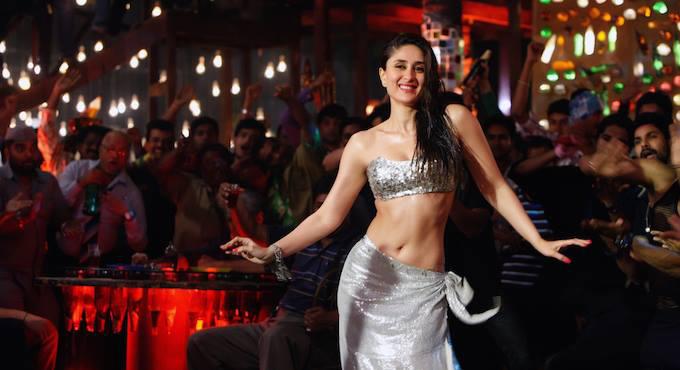
  4. An obnoxious ‘item song’: I have never come across a more pointless and lecherous ‘item song’ than ‘Mera Naam Mary Hai’. Principally, I am not opposed to the idea of an item song in a Bollywood potboiler as long as it serves some purpose in the narrative. Karan Malhotra’s Agneepath had an enjoyable item song in Chikni Chameli, but Mary arrives on the scene with no prior warnings and goes out without doing much. An item songs leading up to a film’s intermission? Really? Also, I wonder what made Kareena Kapoor Khan say yes to such a poorly written song with distasteful dance moves.kareena-kapoor-khan-looks-hot-mera-naam-mary-item-song-teaser-released-brothers-movie
  5. Uninspiring Support Cast: You have Ashutosh Rana in your support cast and you make him carry bottles in and out of the fighting ring. This is just one of the instances of talented actors being cast in rather insignificant roles in Brothers. Jackie Shroff is impressive in some scenes but accepting him as Akshay Kumar’s father seems a little difficult. True to his age, Shroff looks like Akshay’s elder brother and especially because the director decides not to shave off Akshay’s white beard and chest hair! Shefali Shah makes an impact in some of the emotional scenes and reminds us about her immense acting potential. Sidharth Malhotra looks a complete misfit and does little except for glaring and growling. It’s sad to see him struggle to get his emotions and body language right in a role that required immense intensity and dedication.
  6. Lukewarm Fight Sequences: Let’s not forget that despite its brutal display of contrived emotions and melodrama, Brothers is essentially a sports film. It is perhaps the first time that a film on mixed martial arts (MMA) and street fighting has been attempted in Bollywood. But sadly, despite all the build-up and staged pre-launch media madness, the fight sequences fail to make an impact. The fighters look more comical than menacing, our two heroes look more tired and aggrieved than motivated and driven. Both the opening and final fight scenes are big letdowns with the audience (in the theater) wondering what to do and whom to cheer for!
There are a very few likeable aspects of Brothers. And Akshay Kumar is one of them. The actor comes up with a nuanced and restrained performance that is very different from the mostly comical or out-and-out action-oriented roles that he has been doing off late. Jacqueline Fernandez (the only real Fernandez in a film of Fernandes’) looks believable in a brief role. The film’s cinematography is above average but other technical departments leave you asking for more – especially the editing department, which seems to have gone on a vacation. The film’s music (Ajay Atul) is a letdown with none of the songs registering in your memory.
Overall, Brothers buys an age-old Bollywood formula from a Hollywood film and makes a mega mess of it. The film is a sleep-inducing cocktail of sibling rivalry, familial discord and sports extravaganza that tries to be too many things at the same time. And most worryingly, it tries to pass off exaggerated melodrama via some in-your-face theatrics but ends up with mud on its own face.
This Independence Day, you deserve freedom for this Karan Malhotra sham of a film.
Rating: *1/2 (Poor)

Aug 8, 2015

Bangistan Movie Review: Only if There Were More Laughs

A film critic turning into a film director is a mouthwatering prospect. Karan Anshuman does the courageous act with Bangistan and you expect the nitty gritties of the film to be tightened. After all, those who throw stones at others should know how to save themselves if those stones are tossed back at them!

Interestingly, Karan Anshuman’s directorial debut Bangistan manages to convince us about its well-intentioned core message but fails to keep all its eggs in one basket. The film, although quirky and innovative at places, is bogged down by a wayward screenplay that clearly lacks one essential element that makes satires work – humor. More on this later.

The film is set in the fictional nation of ‘Bangistan’, where Muslims hold sway in the North while the Hindus have South as their stronghold. A small little animation in the beginning shows us the exact location of Bangistan on the world map and the irony of Bangistan’s location being akin to that of India and Pakistan is not lost on us. There are also a few delightful pun-ny references to Star*ucks, FcDonald’s, extremist Mullahs proclaiming their love for diet coke and Hindu and Muslim religious leaders informally referring to the Pope as ‘Popchi’.


Praveen Chaturvedi (Pulkit Samrat), obviously a Hindu from ‘South Bangistan’ (yes, some of the interpretations and references in the film are way too simplistic) is an aspiring actor who is duped by a local Hindu extremist outfit ‘Maa Ka Dal’ and its head Guru ji (Kumud Mishra) into a suicide mission. On the other side of the spectrum is Hafiz Bin Ali (Riteish Deshmukh) aka Harold of the BPO world, who opts for a similar mission after being coerced by the chief of a wannabe Jihadi outfit ‘Al-Kaam Tamaam’. Interestingly, the chief of Al-Kaam Tamaam is again played by Kumud Mishra and you can’t help but appreciate the subtle messaging behind it. Yes, all the extremists, whether Hindu or Muslim, are basically two sides of the same coin! Good job on that part, Mr. Anshuman.

The action then shifts to Poland where the two bombers arrive to bomb (well, obviously!) a religions’ conference where leaders of their faith are about to give message of peace and harmony. In a film that has a liner and simplistic style of storytelling, you are impressed by the context setting and how the director drives home some sarcastic and satirical points. But while the first half is breezy and crisp, true to the film’s satirical core, the second half meanders a little into the preachy mode. Some sequences on religious tolerance and Hindu-Muslim bonhomie are so preachy and predictable that you feel like yawning. The reason behind why the two suicide bombers decide to ‘become each other’ is also never clear and it comes across more as a ploy to push through the discourse on religious harmony.


Bangistan scores well in the departments of satire and sarcasm. Sample this, a night club in Poland where the two wannabe terrorists hang out is called ‘Bull and Boar’ – a subtle reference to the widely held religious beliefs about these two animals in Hinduism and Islam respectively. Also, the director pays some smart odes to great films and filmmakers of the past through its support cast. For instance, Tamim Hussain (Chandan Roy Sanyal), a Bangladeshi taxi driver in Poland, addresses himself in the third person as ‘Citizen Hussain’. All of this satire and subtle humor is present throughout the film but strangely the laughs are missing!

If Tere Bin Laden and Filmistaan are still remembered and widely regarded as two of the finest satirical films on terror, it is because these two films made us laugh effortlessly. Bangistan does not do that. Most of the jokes or one-liners fall flat, you smile and giggle at times, but never really laugh out loud. Reasons? One, the dialogues could have definitely been funnier. It seems the writers 
invested way too much in setting up satirical situations and references but fell short just a bit when it came to infusing humor in the dialogues. Interestingly, some of the film’s songs are very well-written (lyricist Puneet Krishna is also credited as one of the screenplay writers). Special mention for the well-meaning and brilliant lyrics of ‘Hogi Kraanti Chaaro Or’ and ‘Is Duniya Se Ladna Hai’.


Another reason why Bangistan fails to evoke laughter could be its mediocre casting. Pulkit Samrat overacts sometimes and tries to imitate Salman Khan on occasions. One should definitely not write him off as an actor yet but he certainly can work on improving his comic timing. Kumud Mishra who has the tempting job of playing both the Hindu and Muslim extremist is strictly average and is more stereotypical than natural. Ditto for Chandan Roy Sanyal, who looks slightly disinterested, perhaps put off by the tiny size of his role. Prateek Babbar, who plays one of the jihadis, looks and acts like a buffoon, and makes you laugh unintentionally. Yes, Bangistan should have opted for a better support cast.

But, one actor who holds his ground and in fact comes up with a matured and layered performance is Riteish Deshmukh. You can’t help but get impressed by his natural flair for comedy and the newfound penchant for versatility. He is gawky, sweet, enraged and funny as per the demand of the situations and carries the burden of Bangistan like Hercules. Jacqueline Fernandez appears in a cameo and has nothing much to do apart from gyrating on a wannabe club song.

All said and done, Bangistan is a well-intentioned film with a noble message that is dragged down by lack of humor, a below par support cast and a climax so Bollywood-ish that you cringe in your seat. Watch it if you can digest satire when humor is not served as a side dish or if you are ready to avail discount on entertainment for the sake of the ultimate message.

Rating: *** (Good)


Jul 31, 2015

Drishyam (Hindi) Movie Review: Much Ado, Little Impact

Drishyam is like a steam engine that runs out of steam right before it is about to reach the destination. Enough tension is built, a few thrills are thrown in between but the finale is rather underwhelming and somewhat predictable. The fact that I could pre-empt Nishikant Kamat’s ‘ace in the pack’ well 15-20 minutes before the climax, left me with a bad taste in the mouth.

Drishyam arrives in theaters this weekend with a huge baggage on its back. The film is a remake of a much-acclaimed and commercially successful Malayalam film with the same name that starred Mohanlal. It was subsequently remade in other three Dravidian languages – Tamil (with the legendary Kamal Hassan in lead), Telugu and Kannada. Also, I am told that the original story of the film (credited to Jeethu Joseph, who also directed the original Malayalam version) is actually inspired from a Japanese thriller, The Devotion of Suspect X. So, if you closely look at it, Drishyam is actually an ‘Inception’ of remakes – remakes of remakes and that too featuring some actors of great caliber. So, the makers did show some guts when they decided to remake the film in Hindi.


The film traces the life of Vijay Salgaonkar (Ajay Devgn), an ordinary cable TV network owner in a Goa village, and his family comprising of his wife Nandini (Shriya Saran) and two daughters. We are repeatedly told Vijay is a 4th grade dropout and an orphan. We are also frequently reminded that Vijay is a movie buff and watches films in his office almost every other night. Also, whenever he watches a Sunny Leone film, he quickly heads back home to be with his wife. Hmm!
In fact, the first half of the film tries a bit too hard to ‘establish’ the character of Vijay for us. You are almost forced to memorize that Vijay is a miserly man but he also loves his family. He is fond of hanging out at a local cafĂ© and does not have a great equation with a local corrupt policeman. In between all this groundwork for the supposed master cover-up that surfaces later in the film, we are also exposed to a freak accident cum crime that Vijay and his family must cover up. Frankly, the circumstances that lead to the crime seem too juvenile to be true and the family’s way of dealing with it is outlandish to say the least.

Despite its conveniences and ordinariness, Drishyam’s first half does have some tense moments that ignite the hope for a riveting second half. The entire sequence where Vijay disposes off a crucial evidence of crime is fascinating and the overall mood is nicely pepped up by an excellent background score (Sameer Phatarpekar). Right before the interval, IG Meera Deshmukh (Tabu) makes an entrance and the stage is set for a promising cat and mouse game.

The second half does have some thrills and a few well-executed sequences. The sequence where IG Meera and officer Gaitonde (Kamlesh Sawant) threaten and beat up Vijay and his family is impactful and chilling. But the eventual finale is a big letdown in terms of impact and compactness. After a long drawn chessboard game between the police and Vijay’s family, the ‘revelation’ at the end does not excite. I obviously cannot divulge much details about the climax but there are ample loose ends which leave you unsatisfied.


Also, Drishyam is undone by a unidimensional style of storytelling and treatment. You know the answer to that coveted question – whodunit, all along. The twists and turns in between the narrative do not match up to the hype or tension that film promises through its premise and background score. IG Meera’s and the entire police department’s virtual surrender in front of the ‘visuals’ shown by Vijay is unfathomable. They know it all along, move in the right direction, dig up all the right evidences and suddenly give up on the suspected culprits. Strange!

In the acting department, Ajay Devgn is his usual brooding and glaring self. There are occasions where he looks uninterested, especially in the stretched and length second half. Tabu is caught in the cauldron of playing a tough cop and a sobbing mother. She does a better job of the later and her endeavor to project herself as a super cop does not create much impact. Shriya Saran as Ajay Devgn’s wife emotes pretty well and there are some scenes where you can almost feel the fear in her eyes. Rajat Kapoor, who plays Tabu’s husband, makes an impact with his restrained and calculated performance.

Drishyam is simply not the film that thrills, excites or surprises you. It is lethargic, lengthy and unidimensional. I have not seen any of its other remakes or the alleged Japanese inspiration, but I do have certain reservations even with the otherwise ‘acclaimed’ and supposedly ‘mind blowing’ story of the film. 

Nishikant Kamat’s Mumbai Meri Jaan and Force were way more enjoyable and thrilling. Drishyam is simply disappointing.

Rating: ** (Average)

Ghosts of Ganga and the Dazzling Display of Death in Masaan

When I try to paint a picture of the Ganga in my mind, I mostly imagine a pristine river with the rising Sun at the horizon. That’s how we all have been conditioned to imagine the holy river. Ganga stands for purity, tranquility and piousness; a river that may have been abundantly polluted over the centuries but, as per the millions’ belief and reverence, still holds the magical power to purify the polluted. Neeraj Ghaywan’s Masaan paints such a contrasting picture of the holy river and its mythical home –Varanasi that it shakes your conscience and unravels the ghosts that lie quietly somewhere deep inside the river bed.
Our films mostly shoot on the Varanasi’ Ganga Ghats in the morning. The serenity of the morning light, the splendid sight of the boats sailing on the waters, the believers paying their obedience to the Almighty, and the sound of hymns and bells of devotion; all of these make for a stunning visual. In stark contrast, Masaan (the word means crematorium in English) has a protagonist, Deepak (played by the brilliant Vicky Kaushal), who dives into the Ganga river at night, burns dead bodies at its bank early in the morning, hits the dead body’s skull and limbs back into burning pyre so that the last rites are seamless, and he also cries and howls in seething pain at its bank.
Masaan’s Ganga is dark, its waters black and its banks are abodes of implicit human agony and anguish. And most importantly, Masaan’s Ganga is a means to achieve the greatest closure any living being can wish for – death.
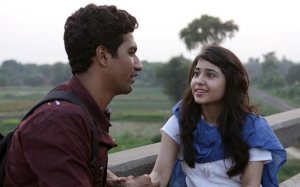
masaan-story_647_072115010130Masaan’s portrayal of the Ganga and its Ghats in Varanasi is innately disturbing but hauntingly beautiful. You are constantly at unease when visuals of burning death pyres hit you at an alarming regularity but never ever you are able to take your eyes off the screen. And that’s the biggest achievement of Masaan and its makers. They throw the greatest reality of life (how ironic that it is nothing but death) on your face but juxtapose it with subtle messaging and a heartwarming story that grips you like a hawk’s claws. Masaan haunts you long after you have left the theater. The visuals stick to your brain.
I have always been intrigued and rather fascinated with themes of death in popular literature and art. JK Rowling brilliantly introduced the beauty of mortality to her young and impressionable readers. Mitch Albom is one of my favorite authors these days as his books throw a different light on death, loss and longing (in no particular order). Neeraj Ghaywan joins the elite list with Masaan. His film takes away the perceived fear and brutality of death and celebrates its inevitability.
That death is often succeeded by a numbing feeling of loss is a universal fact. And loss, either by death or by separation, is succeeded by a strong sense of longing. Masaan’s principal characters epitomize the trinity of death, loss and longing. Here are some excellently conceptualized and seamlessly executed sequences from Masaan that give us ample indication that Neeraj Ghaywan is a man who likes to keep the reality naked:
  1. In a heart wrenching sequence in the second half, Vidyadhar Pathak (played by the ever-reliable Sanjay Mishra) puts his head in his daughter Devi’s (played by a restrained Richa Chaddha) lap, a beautiful role reversal of the man-child relationship, and says sheepishly, “Hum tumhari Maa ko nahin maare hain” in a typically innocent Bihari/Eastern UP accent. Flood gates of his eyes open and the inner guilt of perhaps not having done enough to save his ailing wife shows on his face in form of helplessness and inscrutable pain. This moment of catharsis cements Pathak’s and his daughter’s weakening bond, highlights the everlasting impact of an important death and showcases how loss and longing always go hand in hand.
  2. Death forms an ever-lasting and sometimes chilling backdrop of Masaan. In another sequence, a reassured and madly-in-love Deepak, whose confidence is boosted by his beloved Shalu’s (played by the beautiful Shweta Tripathi) acceptance of his supposedly lowly caste and social background, is woken up by his irritable elder brother in the morning. He wants Deepak to help him in burning some of the dead bodies as the volume of work is unexpectedly large. Deepak gets on with the task with an air of nonchalance as burning dead bodies was his family’s daily job and his everyday sight. The sequence goes on and on for good 3-4 minutes with Deepak picking up dry woods, shoving limbs back in the pyre, burning dead bodies and you wonder what could be the significance of this longish sequence. The sequence finally ends when Deepak is helping his brother in lifting a dead body and putting it over the pyre. The right hand of the dead body suddenly comes out of the white shroud and Deepak notices a familiar red ring in one of the fingers. Shalu had died in a bus accident last night.
  3. Deepak, shocked and numbed by the cruel twist of fate and irony of circumstances, somehow manages to pull out the ring from Shalu’s finger – the only memento of their brief but breezy romance. But, that ring becomes an albatross around his neck as it keeps reminding him of his ill-fated love. He cries manically in seething pain while drinking on one of the secluded Ghats along with his bunch of caring and understanding friends. As he lets out bursts of extreme despair and frustration in loud mourning, your eyes become wet and the body shivers by the mere thought of having to face such tragic loss in life.
  4. Deepak eventually throws the ring into the river one fine night. The very next moment, he wants to retrieve it back as he jumps into the dark waters and swims vehemently but fails to locate the tiny ring. Towards the climax, the ring is finally retrieved by Jhonta (played by the little bombshell Nikhil Sahni) who is Vidyadhar Pathak’s tiny partner in his religious business on the Ghats. Jhonta gets his hand on the ring while having dived into the river as a part of a bizarre diving competition on the Ghats where children collect coins from the river bed while elders bet on them. Pathak bets as much as ten thousand rupees on Jhonta as he desperately needs money to pay the policeman’s ransom, but Jhonta drowns mid-way through the competition and is later hospitalized in order to be saved. Pathak loses all his money but Jhonta rekindles his hope by handing him over Shalu’s ring which would fetch some money once it is sold to a jeweler.
One man’s loss is another man’s saving grace in Masaan. Neeraj Ghaywan portrays death both as a tragedy and a symbol of hope. Deepak’s family earns money by burning dead bodies, Deepak has to see his beloved’s dead body burning before his eyes and Pathak’s life is saved by a token of someone’s lost love and tragic death. All of this unfolds in and around Ganga, the river that mostly symbolizes life but also quietly carries the dead in her womb. Masaan is a celebration of death, loss and longing. The kind of celebration that resonates in our heads for long – irrespective of how much we have loved, lost or longed ourselves.
P.S. – I watched Masaan on 27th July at a Delhi multiplex. The 08.35 PM show. Coincidentally, within half an hour or so, a NDTV news flash on my phone informed me about the sudden demise of former President Dr. APJ Abdul Kalam. Death and its contours – you can never figure it out completely.

Jul 18, 2015

Bajrangi Bhaijaan Review: Salman Doesn't Play Himself and It Works

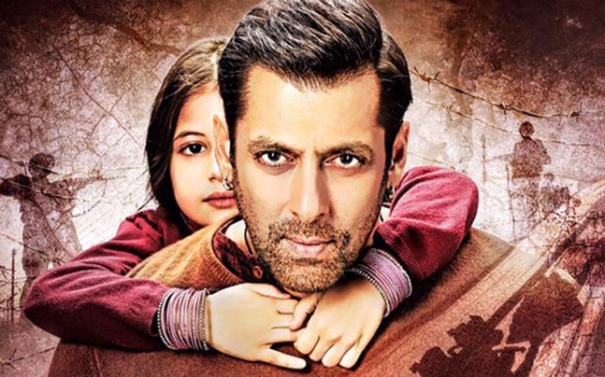
Salman Khan is Rambo meets Rajinikanth with a sprinkle of Robin Hood for Bollywood loving populace. The damned shirt that he wears, rips itself off his chiseled body, Munnis swoon over his dance moves, leading ladies blush every time he cracks a not-so-funny joke and most importantly the bad men remember their grannies by a mere mention of our great Indian messiah of the masses. So, it is almost unthinkable to imagine the same irrepressible Salman Khan as a simpleton who is so earnest, sweet and well-behaved that you may consider pinching yourself. Kabir Khan’s Bajrangi Bhaijaan takes a great gamble by projecting Salman as not himself but as somebody that he can perhaps never be (in real life) – and boy, the gamble pays, and pays well!
Let me remind you that Salman Khan as a simple and sweet guy is not a discovery of Kabir Khan. Salman of 90s was a shy but charming hero, most notably as portrayed in Sooraj Barjatya films, but it is the Salman of the post Wanted era that the audiences have lapped up with both their hands. The macho image of Bhai who is ‘Dabangg’ enough to ‘Kick’ his enemies but his also ‘Ready’ to have a bit of fun has done wonders to Salman’s career which was going through a rough patch in the mid 2000s. It is in this regard that Bajrangi Bhaijaan is both a clever and risky film for Salman Khan.
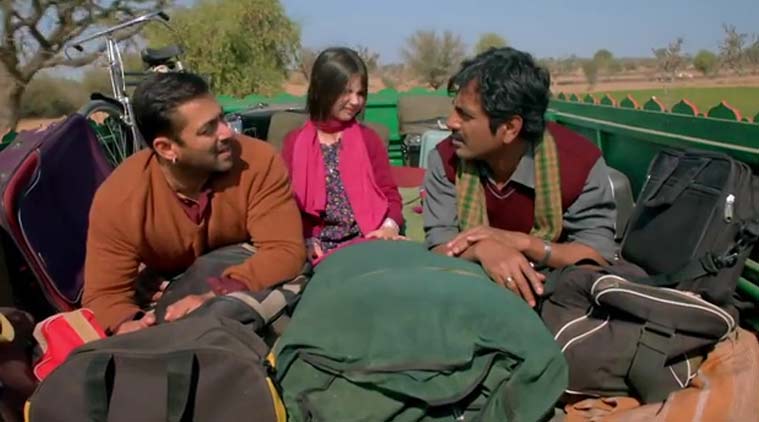
Khan plays Pavan Kumar Chaturvedi aka Bajrangi in Bajrangi Bhaijaan, a sweet buffoon who is a great devotee of Lord Hanuman but is actually good for nothing in life. But his life changes when he bumps into a 6-year old Pakistani girl Munni/Shahida (played by the cutest girl child ever – Harshaali Malhotra) who has lost her way in India. Overcoming his initial reluctance and apprehension, Pavan finally decides to take the little girl all the way to Pakistan all alone and that too without any Visa or passport! Did you just imagine Bhaijaan punching the soldiers in green in their face, driving through the roads of Karachi in his sports bike, shooting and mowing bad souls who come in the way? Well, nothing of that sort happens. And, yes I just devoted a paragraph to describe the story of a Salman Khan film! Bajrangi Bhaijaan DOES have a good story!
bajrangi-story_647_062715064026
Bajrangi Bhaijaan’s greatest strength is its simplified, or say oversimplified approach and treatment. Our hero, Bajrangi, is a devout Hanuman bhakt so he never lies, not even to the Pakistani officers who are questioning his presence in their country. Bajrangi is a noble soul, a sweetheart, so he never unnecessarily runs into Pakistani police or army, unlike Sunny Deol of Gadar. In fact, most of the times, Bajrangi is avoiding confrontation, folding hands, greeting people, sharing happiness! Ah! Say hello to new Salman Khan!
Kabir Khan tries to juxtapose formula with social messaging and mostly succeeds. In fact, his simplistic resolutions to Indo-Pak bitterness, religious orthodoxy reminds you of the unbelievable but enjoyable social problem solutions provided by Rajkumar Hirani and his team in PK and 3 Idiots. Kabir Khan does not have the finesse of a Hirani but he is good with the limited scope of story and screenplay which is at disposal. Most interestingly, he manages to extract ‘acting’ of some sorts out of Salman Khan who easily delivers one of the most important performances of his ‘acting’ career. Salman may not be a revelation in the film, he has never been one throughout his career, but he is clearly earnest, sweet and more ‘human’.
Bajrangi Bhaijaan is also catapulted by a strong support cast led by Nawazuddin Siddiqui who plays Chand Nawab, a small time reporter in Pakistan. Nawazuddin brings in his unique brand of humor and a certain earthiness to the entire proceedings. Kareena Kapoor Khan is relegated to a bit role and it is sad to see her play an almost third fiddle in the film. Sharat Saxena and Rajesh Sharma are effective in their support roles but the star of the show is the little girl, Harshaali Malhotra. The girl is brilliant given her tender age and the fact that she has no dialogues to deliver. Her pretty face, lovely smile and occasional tears smoothen the film’s blurred edges and evaporate the audiences’ fatigue, if any. The bonding of Pavan and Munni/Shahida is another high point of Bajrangi Bhaijaan. It is one of the finest rendition of ‘child and his/her protector’ relationship that we have seen in Hindi films of late.
nawazuddinbajrangibhaijaan
The film’s music (Pritam) is average and some of the songs add little value to the narrative. The film could have easily been trimmed by at least 15-20 minutes to make it more sleek and edgy. Nonetheless, the overall length of the film (154 minutes) never really catches on to your nerves because the narrative is nicely woven into different sequences and sub-plots. The cinematography (Aseem Mishra) captures the essence of Kashmir, Delhi and Rajasthan perfectly and the recreation of the Pakistani hinterland seems to be believable.
Bajrangi Bhaijaan may not be perfect and you may wonder at times that how can somebody be ‘so good’ or ‘so foolish’. But, Salman’s films have always been about the make-believe world. For a change, this is a Salman Khan film that does not ‘force’ you to believe, it simply makes its point in an uncomplicated manner, and you are almost swooned into the utopian world of a simpleton. It has its heart at the right place, emotions tucked in large quantities (keep tissue papers handy), and intentions mostly gentle and nice.
Watch Bajrangi Bhaijaan because it is one of the better Salman Khan films in a long long time. Yes, this one is not just about the affable Bhai but also has a lot of ‘jaan’ or life of its own. Recommended!
Rating: ***1/2 (Very Good)

Jul 11, 2015

I Love New Year: Canned But Not Devoid of Juice

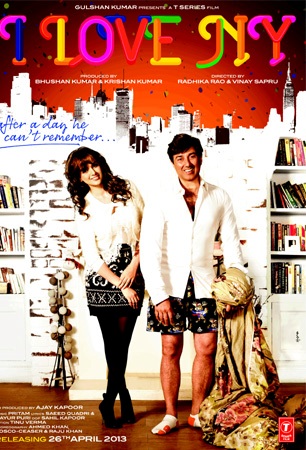
If you decide to watch Sunny Deol-Kangana Ranaut starrer I Love New Year (stylized as ‘I Love NY’), which in all likelihood you would not, do not enter the theater with any pre-conceived notions. Yes, the film has been delayed for a couple of years and it is definitely not the best Hindi rom-com that you are likely to come across, but it is not unwatchable. In fact, I Love New Year genuinely tries to be different from run-of-the-mill rom-coms and attempts to tell a unbelievable story through believable means. Most of the film’s pitfalls are inflicted by the cruel fact that lost time and momentum makes any product stale and mediocre. Adding salt to the injury is Kangana Ranaut’s decision to mostly disassociate herself from the film and Sunny Deol’s lack of enthusiasm in promoting what is one of his better performances in recent times. More on this later.
I Love NYSunny Deol plays Randhir Singh, an ageing and unmarried Punjabi (no prizes for guessing that), who lives in Chicago with his father (Prem Chopra). A day before the new year, Randhir has a drinking binge with his friends and is in the process transported to New York. In New York, Randhir mistakes Kittu Verma’s (Kangana Ranaut) flat as his own and there begins a series of confusions and misunderstandings that spill well into the upcoming new year.
The film’s story is reportedly based on a popular Russian rom-com. That scope of inspiration aside, the story does have merits of its own. The premise of a drunk ageing bachelor from Chicago landing up straight in the bedroom of a young, vibrant girl in New York is quite tempting. Love as a subject has been so thoroughly explored by all the filmmakers that any innovation in ‘how they actually meet and fall in love’ ends up exciting me. The setting of the story is simple and real with most of the action unfolding inside an apartment. The indoor setting, the smooth flow of one scene into another, quirky and smart dialogues, they all set up a nice little mood for the film.
However, the bright side of the story and screenplay mostly ends here. There’s is too much left to chance and destiny in the whole proceedings. The film’s climax is rather underwhelming and you wonder if the film could have ended good 15-20 minutes before. As the film has seen the light of day after being in cold storage for long, there are some tacky dubbing and visual patches. The climax looks incomplete and the overall film does bear the stain of having a somewhat stale look.
NY
Let;s now talk about the performances. Kangana Ranaut did not want this film to be released. When you will watch I Love New Year, you will exactly know the reasons behind the film’s leading lady’s inhibitions. Miss Ranaut perhaps did not want the film to release because her acting looks very unpolished and poor. In fact, there are some scenes where Kangana makes you laugh unintentionally because of her funny accent and problematic dialogue delivery. It is clear that she has come a long way in these two years and her apprehension about the film was very much related to her own performance. However, I sincerely feel that once a film has been completed, it becomes the producer’s property and the actor has little or no right to try and stall its release. Moreover, no matter how bad you were in your skills in the past or how fine-tuned you are now, an artist must stand by his or her work all the time. Specially, when big money and livelihood of many is at stake.
Sunny Deol gets out of his comfort zone and tries his best to give a sincere and composed performance. His chemistry with Kangana does look a little odd, largely because of the 30-year age canyon that separates the two. Though, Deol does a fine job of the difficult task assigned to him, you end up wondering why would have the makers thought of casting him in this role? Did they want to go for an unusual pairing? Then, why not choose an older actress opposite Deol or a younger actor opposite Kangana? I mean all the good acting talent of Deol and Kangana aside, there are some close-up scenes where the two look like father and daughter! T-Series should fire their casting director (or have they done that by now?).
I Love New Year’s biggest plus is Pritam’s music. From the peppy Gudd Naal Ishq Mitha to sombre Judaai, the film’s soundtrack is soothing and melodious. In fact, you may want to hunt for the film’s songs and download them – a definite good addition to your playlist. The film’s production value, editing, dubbing and sound design aren’t great. That’s most likely because of the huge gap between production and release of the film.
Overall, you feel letdown by I Love New Year, not because it’s a disastrous film, but because it’s been handled disastrously. What could have been a light, little rom-com is eventually a half-baked embarrassment that does more harm than benefit to reputation of everyone involved. Watch it if you want to see how mediocre Kangana was as an actor just a couple of years ago or if you want to see a calm, caring Sunny Deol who still has some acting chops left in him.
Rating: ** (Average)
The review is also published on Mad About Moviez.

Jul 4, 2015

Guddu Rangeela Review: High on Promise, Low on Delivery

Guddu Rangeela is a prominent singer in Bhojpuri music industry, famous or rather infamous for his songs that are laced with sexual innuendos and crass lyrics. Subhash Kapoor’s film Guddu Rangeela, on the contrary, opens with an absolutely riveting ‘modern devotional song’- Mata Ka Email. While many may not be familiar with the Bhojpuri singer Guddu Rangeela, but the irony of the film, with that same notorious name, starting with a hilarious devotional song will not be lost on someone from Bihar. Sadly, despite a funny start and a reasonably exciting mid-point, Subhash Kapoor’s film squanders its potential in a dreary, lost second half.
The film is set in the rural milieu of Haryana, a land known for its notorious Khap panchayats, local political strongmen and a society marred by deep caste divides. Guddu (Amit Sadh) and Rangeela (Arshad Warsi) are brothers who pose as local orchestra players but are in reality petty thieves-cum-informers who tip off organized burglary gangs about potential wealthy households. Circumstances embroil the brothers into a kidnapping incident where it turns out that their supposed victim Baby (Aditi Rao Hydari) has dragged them into a game plan of her own. Also in the frame is Billu Pehelwan (Ronit Roy), a local MLA and Khap strongman who has a past to share with all the three protagonists – Guddu, Rangeela and Baby.
To be fair to the writer-director Subhash Kapoor, Guddu Rangeela does have an enticing premise beaming with great promise. Although, the film is riddled by numerous sub-plots, they never really drag down the film. What pulls the film down is its meandering screenplay and treatment in the second half. You are confused about the intentions of the maker as to what exactly he is trying to dish out – a social commentary, a satire, a crime-thriller, a comedy, or wait, a love story? The tacky Guddu-Baby love song in the second half comes out of nowhere and unnecessarily drags the film’s run time. Similarly, there are some unwanted and long cat-and-mouse sequences where Guddu and Rangeela, or their brethren, land in a soup, only to come out of it unscathed. The film’s climax is also not executed perfectly with the numerous unpolished sub-plots suddenly raising their hands to get noticed. And yes, there’s an attempt to deliver a lecture on futility of Khaps and women empowerment towards the end. That entire scene is so preachy and somewhat embarrassing that you shift in your seat a little.

But at heart, Guddu Rangeela is a harmless comical affair. As pointed earlier, the film has a breezy first half that is sprinkled with ample doses of humor – humor that is overt but also tastefully subtle at times. The camaraderie of brothers, Arshad Warsi and Amit Sadh, is pretty cool and together they look like a team of goons-with-noble-hearts that you feel like rooting for. While Amit Sadh plays the more extrovert and ‘rangeen’ Guddu (I wonder why he was not named Rangeela, given his penchant for flings), Arshad Warsi plays the more restrained but much-wittier Rangeela. Arshad Warsi is in form here after a long time and gets to mouth a bulk of the film’s quirky, excellent dialogues. Amit Sadh is well-suited for his role and Aditi Rao Hydari does a fantastic job of her relatively sizable role in the first half. The romantic angle between the two is little inexplicable and largely untapped. Among the support cast, Rajeev Gupta emerges as a show-stealer in the role of a Haryanawi Police officer whose innocence and superb comic timing belies the stereotypical portrayal of corrupt police officers in Hindi films. Ronit Roy looks menacing as the antagonist and seamlessly picks up a thick but believable Haryanawi accent.
Overall, Guddu Rangeela is one of those films that makes you think – ‘only if they could have done this differently’. A kind of film that you want to laud for its merits but you also cannot ignore its glaring loopholes. Watch this Subhash Kapoor film because it has some genuinely funny dialogues, a tempting premise and a couple of actors with great comic timing. Give it a miss, if you are absolutely averse to complicated subplots and lengthy ‘trapped-and-rescued’ sequences.
Rating: **1/2 (Average)

Jun 28, 2015

Travel Diaries: Because Diu Was Long Due

'Nothing spoils you like good travel'. I texted this message to a friend while conversing with her about how difficult it is to get on with your 'routine' life just after you are back from a memorable vacation. She was quick to understand my sentiments (she had been a long 'city' vacation herself) and both of us realized that a couple of weeks and a dozen Instagram pictures may never suffice for the incredible memories one gathers while traveling, living and loving.

Diu happened by sudden desire, spontaneity and an early morning decision to just go there. It is unbelievable how you plan to go somewhere forever but never really make it. I think it's the calling that decides where and when you will end up. I had always been intrigued by the tiny UT of Daman and Diu and being the only Indian alive to have NOT been to Goa, I was really keen to explore a place that is referred by many as Goa without its crowd and commercialization.

Some early research busted three of my initial myths. One - Daman and Diu were far apart, some 640 kms away from each other by road. So, it is best suited to plan a trip to the prettier, cleaner and calmer Diu rather than Daman. 

Two, Diu is not a very frequented travel destination (one of the reasons for my wish to go there) and hence there is very little or rather negligible travel information and reviews available on the Internet. The ones that are available are from commercial websites that use so many adjectives that it becomes difficult to distinguish Daryaganj from Diu. 

Three, Diu is not Goa. I don't know (yet) what Goa is like. But Diu is definitely not Goa. It is something else. Diu is Diu. One of its kind.

Early morning jog at the Nagoa beach.

How to reach Diu? 

Diu is not the easiest travel destination if you are planning to go there from Delhi. The best and quickest bet is to plan an air travel via Mumbai well in advance that will cost you around 8,000 INR for the round trip. Remember that there is only a single flight from Mumbai to Diu every day and if you book your flights wisely, the overall journey from Delhi to Diu will not take more than 6 hours.

Alternatively, if you are not short on time, you can reach Diu from Delhi by aggregating two train trips - first and the longer one that takes you from Delhi to Ahmedabad (14 hours overnight journey) and the second train journey that is shorter but more tiring - from Ahmedabad to Veraval, the nearest rail head from Diu (90 Kms away). The journey from Ahmedabad to Veraval takes approximately 10 hours. From Veraval, you will have to book a taxi to Diu, which will take another couple of hours. So, in total you will take at least 36 hour to reach Diu from Delhi via two trains and a taxi journey. 

The choice is yours. If you want to soak in the Gujarat countryside and relish a train ride, and most importantly, are not short on time, the train journey option is fun and fulfilling. And if you are the high flying kind, who thinks airports are more poetic than railway stations, go for the Via Mumbai flying option. The quiet, little Diu airport takes you by surprise for its, hold your breath, diminutiveness.

Diu from 16000 ft above the ground

Where to Stay in Diu?

Diu does not have many fancy places to stay or let's say it will not offer you any luxury that you normally associate with travel destinations these days. Trust only the top 10 hotels listed on popular travel websites and water down your expectations before you land in Diu. Hotel Palms Resort (my hideout in Diu), Hoka, Radhika Beach Resort and Azzaro are some of the good places to stay in Diu.

The best part about staying in Hotel Palms is the almost-private beach that you get as a bonus. The resort is away from the hustle bustle of the popular Nagoa beach and is situated right in front of the secluded and picturesque Kodidhar beach. 

So, set out for a morning walk on the long and remarkably clean beaches, go out for a stroll in the evening, have a bottle of beer or two (dispose the empty bottle responsibly!), read a book by the seaside or do nothing. Simply sit and feel amazed at the sheer vastness of the Arabian Sea.

Sea waves at the Kodidhar beach. Right in front of Hotel Palms

Sunrise at the Kodidhar beach

What to Do in Diu?

You can choose to do nothing in Diu. And yet, never get bored. The island has an innate tranquilizing and calming quality that lets you unwind and relax. 

But, there are some magical places in and around the city that present a heady blend of  Diu's historic connection with the Portuguese and its mesmerizing geographical location at the edge of the Arabian sea. Hire a cycle, a bike (at 300 INR per day approx) or a car (at 1500 INR per day) and zip through the well-built roads that connect all the major tourist attractions. Sample these:

1. The stunning Diu fort. Built by the Portuguese. Frequented by Gujjus.

A part of the Diu Fort

Pani Ka Kotha right in the middle of the sea. As seen from the Diu Fort

Tourists at Diu Fort

2. The most breathtaking location in all of Diu - The INS Khukri Memorial

View from the INS Khukri Memorial


The Open Air Theatre at the INS Khukri Memorial

3. The intriguing Naida Caves

Not sure what/who built the Naida Caves. It's either the nature or the Portuguese

4. The historic St. Paul's church

St Paul's Church is one of the few functional Portuguese churches in Diu

St. Paul's Church - Front View


5. The abandoned church in Fudam

The mostly abandoned church in Fudam, Diu

6. The Gangeshwar Mahadev Temple - Where the sea pays obedience to Lord Shiva

The unique Gangeshwar Temple with five Shiva Lingas.
The sea waves come running in every now and then.

7. The sunrise and sunset at Nagoa beach

Sunset at Nagoa beach

The morning Sun's abandoned chariot. As found near the Nagoa beach

Mornings be like.

Mornings be like.

Early morning sight at the Nagoa beach

8. St. Thomas Church and Museum

Portuguese statues and artifacts at the St. Thomas church

Where to eat in Diu?

Getting good food in Diu is an issue. Most restaurants serve Punjabi and Chinese cuisine that does not taste like Punjabi and Chinese food! Hoka has a nice little cafe that serves good continental food. The only restaurant that serves good, authentic Gujarati in whole of Diu is Bamaniya restaurant, a nondescript gem on the main highway that connects Nagoa beach and the airport to the Diu city.

First encounter with white jaggery or 'Gudd' 

The sumptuous Bajra Na Rotla and Baigan Bharta. With some chilli fry and Gudd. 

I believe when you find it difficult to express through fluidity of words, you opt for frozen pictures. And that's why I have put up more pictures than words to make a case for Diu. :)

This small and quiet island is sans all the frills attached to a beach vacation these days. Truly, ilha de calma that the Diu tourism claims it to be. Go, find peace, find love or simply find yourself in Diu. 

And here is the customary 'I Love Diu' picture. 

I love Diu Vs. I loved you

P.S: Be careful while you say 'I love Diu' to your girl. She might construe it as 'I loved you'. And that will be the end of the game.

I traveled to Diu in June when the temperature was pretty high. Best time to travel to Diu is August-March. Or simply, whenever you feel like.


All the pictures in the post are clicked by the blogger. Don't reproduce/reuse without permission. For more pictures from Diu and other places, follow the blogger at Instagram - @ashishanant 

Jun 20, 2015

ABCD 2 Review: Bigger, Better and Spectacular at Places

Remo D’souza is a brave man. He mostly resists the temptation of going for 'typical Bollywood' choreography and dishes out some lovely psychedelic, hip-hop, Broadway and other western dance forms in ABCD 2, sequel to his 2013 hit ABCD (Any Body Can Dance). I am not an authority to comment on the quality and level of dancing, but as an average movie lover seated in the theater, much of the choreography in ABCD 2 gives you goosebumps. Your limbs twirl a little and a bit of shiver runs down your spine during several dance sequences in the film – especially during Prabhu Deva’s stunning introductory dance number and the exhilarating Ganesha formation towards the climax. More on that later.
Despite song and dance being an integral part of syncretic Indian culture and particularly Bollywood films, genuine Hindi dance films are as rare as rains in Rajasthan. Director-choreographer Remo bucked the trend with ABCD in 2013, which featured an ensemble cast of relatively unknown reality show dancing gems. With ABCD 2, Remo ups the ante by assembling perhaps the finest bunch of dancer-actors, led by young stars Varun Dhawan and Shradha Kapoor. The film is not exactly a sequel but rather a new installment in the ABCD franchise with only Prabhu Deva reprising his role of Vishnu – a dance guru like no other.

Like any other dance film, ABCD 2 has a wafer-thin storyline that traces the real-life journey of a disgraced dance troupe from Nallasopara, Mumbai that resurrects its reputation and represents India in the World Hip-Hop competition in Las Vegas. The troupe is led by Suresh (Varun Dhawan) and comprises his childhood friend Vinnie (Shradha Kapoor), Raghu (Raghav Juyal), Vernon (Sushant Pujari) and a host of other talented dancers which we have seen performing in numerous television shows.
The film has a breezy and hugely entertaining first half where, rather surprisingly, Prabhu Deva walks away with all the whistles courtesy his dancing and comic timing. The legendary dancer’s elastic moves leave you in awe in the song 'Happy Hour Hai' and you wish you could have seen more of Vishnu sir's fabled dancing in the film. There are some other lovely dance routines in the first half and a neat little twist towards the intermission to keep you hooked.

However, things get a little haywire post intermission when the story and screenplay of the film start to crumble under their own weight. There are some unpolished and needless subplots that only add to the overall length of the film and prohibit it from becoming truly great and spectacular. Things change for better after Lauren Gottlieb makes a late but electrifying entry through the song 'Tere Naam Ka Tattoo'. The song is so energetic and embellished with superior and glamorous dance moves that you almost forget and forgive the twenty odd minutes of agony post interval. Full points to Lauren for making a massive impact in what is a pretty shortened role. Her dancing caliber is amply displayed in the mesmerizing hip-hop tribute to Lord Ganesha in the song 'Hey Ganaraya'. This dance sequence is so beautifully choreographed and conceptualized that you wish it could have been the climax of the film. But sadly, even after reaching this crescendo, the film meanders along for quite some time and the dance performances never really attain the same 'high'.
Talking of loose ends, the film never reveals the motive behind the alleged plagiarism against the protagonist and his dance team. Some of the dance sequences in the second half seem to be stretched and attaining the climax becomes quite a task towards the end! These loopholes aside, the film gets its casting spot on with Varun Dhawan stamping his authority as one of the finest dancers in Bollywood. The young actor, however, is no match for Prabhu Deva, in the only sequence where the two share the dance floor, but you got to give credit to Varun Dhawan for being the heart and soul of ABCD 2. Shradha Kapoor surprises with her dancing talent and does a fine job of role as Vinnie. All the other actors in the film are terrific dancers or should I say vice-versa? Specially, for Raghav Juyal whose comic timing is very much aimed at the galleries.
The scale and canvas of ABCD 2 is mind-boggling with top-notch choreography – something that you expect when Remo and other top names collaborate, fascinating cinematography (Vijay Arora) and intelligent use of special effects. Much of the film’s soundtrack is enjoyable, thanks to Sachin-Jigar's soulful compositions. Editing, one feels, could have definitely been tighter and the screenplay could have surely avoided some of the deviations.
But, all said and done, ABCD 2 is a thorough entertainer that takes Indian dance films to an all-new level. A film that gets your heart pumping and your body grooving even while you are seated, and never really lets you down despite its near three hour long run time. Go out in the theater with your dancing shoes on, grab your popcorn and behold the spectacle of dancing brilliance!
Rating: ***1/2 (Very Good)